
Introduction
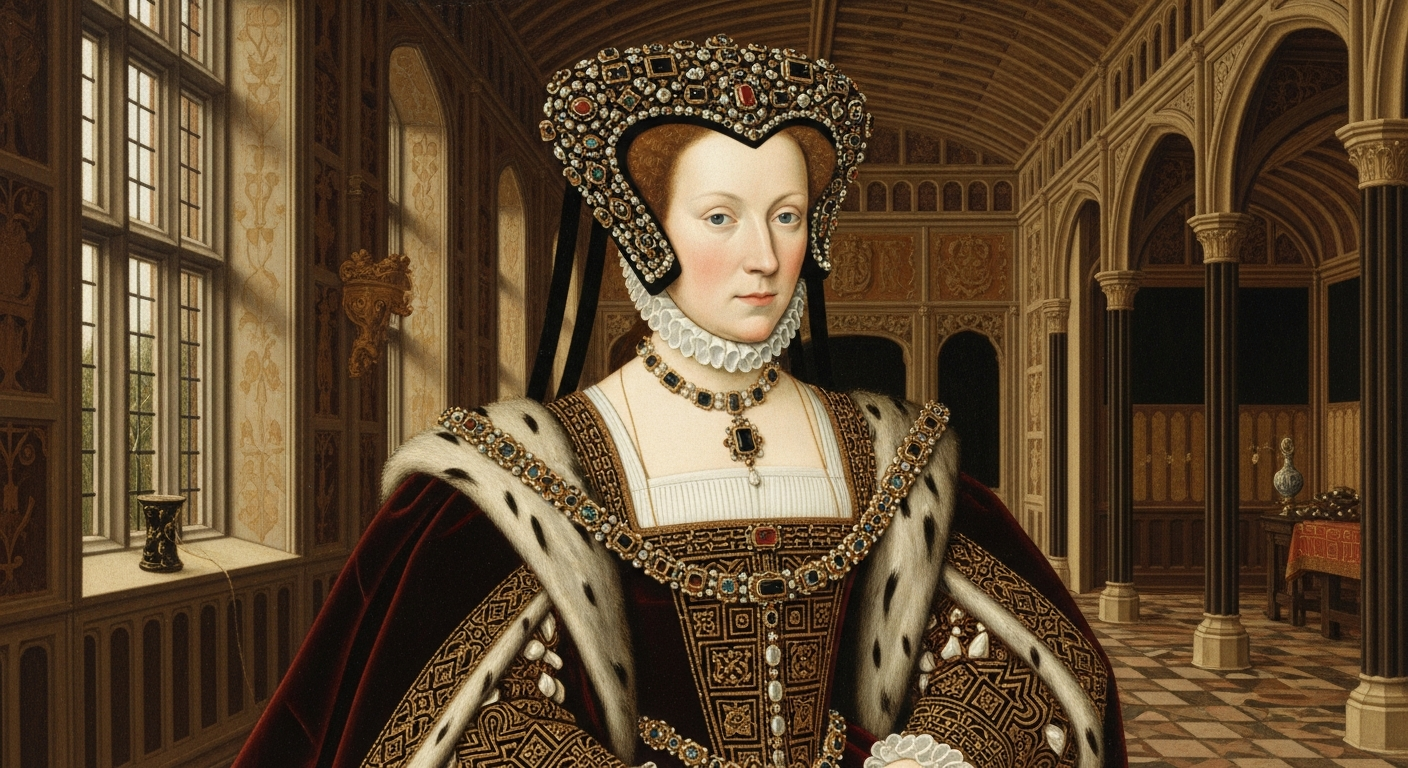
In the annals of British royal history, few marriages have ended quite as dramatically as Henry VIII’s fourth union with Anne of Cleves in 1540. While the Tudor monarch’s matrimonial adventures are well-documented, the Anne of Cleves debacle stands out for its sheer speed and the extraordinary circumstances surrounding its dissolution. Within just six months, what began as a carefully orchestrated political alliance had crumbled into one of the most notorious annulments in English history, with Henry claiming he found his new bride so physically repulsive that he couldn’t bear to consummate their marriage.
Yet beneath the scandalous surface lies a far more complex tale of international diplomacy, royal protocol, and perhaps most remarkably, how a rejected queen transformed potential humiliation into a comfortable and respected position at the English court. The Anne of Cleves marriage reveals much about Tudor politics, the precarious nature of royal alliances, and the surprising ways in which a clever woman could navigate the treacherous waters of Henry VIII’s court.
This fascinating episode offers insights into everything from 16th-century marriage negotiations to the role of physical attraction in royal unions, whilst also showcasing one of history’s most successful examples of turning royal rejection into personal triumph.
Historical Background
Anne of Cleves arrived in England in December 1539 as part of an ambitious diplomatic strategy orchestrated by Thomas Cromwell, Henry VIII’s chief minister. Born around 1515 in Düsseldorf, Anne was the daughter of John III, Duke of Cleves, a strategically important Protestant ruler whose territories bordered the Holy Roman Empire. Her marriage to Henry was intended to cement an alliance between England and the Protestant German states, providing Henry with crucial continental support during a period when Catholic powers France and Spain appeared to be drawing closer together.
The match had been arranged based on a portrait painted by Hans Holbein the Younger, Henry’s court artist, who had been dispatched to Cleves in 1539 to capture the prospective bride’s likeness. According to contemporary accounts recorded in the Letters and Papers, Foreign and Domestic, Henry VIII, the king was initially pleased with Holbein’s work and eager to proceed with the marriage negotiations. The political advantages seemed clear: Cleves offered Protestant solidarity and strategic positioning against potential Catholic threats.
However, when Henry met Anne in person at Rochester on 1st January 1540, the encounter proved disastrous. Contemporary sources suggest the king was immediately disappointed by Anne’s appearance and manner, though exactly what prompted such a strong negative reaction remains a subject of historical debate. Some accounts suggest cultural differences played a role – Anne spoke no English and little French, communicated primarily in German, and her dress and customs differed markedly from English court fashion.
Despite Henry’s private misgivings, the marriage proceeded on 6th January 1540 at Greenwich Palace, driven by the political necessity of maintaining the diplomatic alliance with Cleves. Yet from the wedding night onwards, Henry made no secret of his reluctance to consummate the union, a situation that would prove crucial to the subsequent annulment proceedings just months later.
Significance and Impact
The Anne of Cleves marriage and its swift dissolution had profound consequences for Tudor politics and diplomacy. Most immediately, it marked the beginning of the end for Thomas Cromwell, whose miscalculation regarding the king’s compatibility with Anne would cost him his life. By July 1540, Cromwell had been arrested, tried for treason, and executed, partly due to his role in arranging what Henry considered a disastrous marriage.
The annulment proceedings themselves set important precedents in English ecclesiastical law. Henry’s legal team argued that the marriage was invalid due to lack of consent – specifically, that Henry’s reluctance meant he had never truly consented to the union. Additionally, they claimed that Anne’s alleged pre-contract with Francis I, Duke of Lorraine, rendered her unable to marry the English king. These arguments, whilst questionable legally, were accepted by the Convocation of Canterbury in July 1540, demonstrating once again Henry’s ability to bend religious law to his personal will.
The speed and relative civility of the annulment also highlighted changing attitudes towards royal divorce in Henry’s England. Unlike his traumatic separation from Catherine of Aragon, which took years and resulted in England’s break with Rome, the Anne of Cleves annulment was accomplished within months through domestic ecclesiastical courts. This efficiency reflected both Henry’s increased control over English religious institutions and perhaps lessons learned from previous matrimonial difficulties.
Perhaps most significantly, Anne’s own response to her rejection established her as one of the most pragmatic figures in Tudor history. Rather than contesting the annulment or fleeing England in disgrace, she accepted Henry’s terms with remarkable grace, securing for herself a generous settlement that included two substantial properties, Richmond Palace and Hever Castle (ironically, Anne Boleyn’s childhood home), plus an annual income of £500 – a considerable sum for the period.
Connections and Context
The Anne of Cleves episode occurred during a particularly volatile period in European politics, with religious and territorial tensions reshaping continental alliances. Henry’s desire for a Protestant alliance with the German states reflected his ongoing concerns about potential Catholic coalitions against England. The collapse of the Cleves marriage coincided with shifting European dynamics, as the anticipated Franco-Spanish alliance failed to materialise, reducing England’s immediate need for German Protestant support.
The marriage’s failure also connected to broader patterns in Henry’s matrimonial history. Like his previous wives, Anne became caught up in the king’s complex psychological relationship with marriage, power, and dynastic succession. However, unlike Catherine of Aragon, Anne Boleyn, or Jane Seymore, Anne of Cleves managed to navigate Henry’s volatile temperament without losing her life or enduring years of legal battles.
Interestingly, the Anne of Cleves marriage occurred between two of Henry’s most dramatic unions – following the beloved Jane Seymour, who died shortly after giving birth to the future Edward VI, and preceding the ill-fated Catherine Howard, who would be executed for adultery in 1542. This timing positioned Anne’s brief queenship as something of an interlude between tragedy and disaster, perhaps contributing to the relatively amicable nature of its resolution.
The episode also illuminates the complex role of court artists and diplomatic representation in royal marriage negotiations. Holbein’s portrait of Anne, whilst apparently accurate by contemporary standards, failed to convey whatever qualities Henry found objectionable in person, raising questions about the challenges of arranging royal marriages across cultural and linguistic barriers.
Modern Relevance and Fascinating Details
The Anne of Cleves story continues to fascinate modern audiences, partly because it subverts expectations about Tudor women’s fates. In an age when royal wives faced execution, exile, or disgrace, Anne’s transformation from rejected queen to respected courtier offers a refreshing narrative of female agency and adaptability. Her story has inspired numerous historical novels and television portrayals, often emphasising her intelligence and pragmatism over the physical appearance that allegedly disappointed Henry.
Recent historical scholarship, including Retha Warnicke’s analysis of royal protocol in The Marrying of Anne of Cleves, has questioned traditional narratives about Anne’s supposed unattractiveness. Some historians suggest that cultural differences, language barriers, or political calculations may have played larger roles in Henry’s rejection than physical appearance alone. This revisionist approach has helped rehabilitate Anne’s reputation and highlighted the unreliability of contemporary accounts that may have been influenced by court politics.
Did you know that Anne of Cleves outlived Henry VIII by ten years and maintained cordial relationships with all his children? She attended Mary I’s coronation in 1553 and remained a respected figure at court throughout the reigns of Edward VI, Mary I, and into Elizabeth I’s early years. Her longevity and continued prominence suggest that her rejection by Henry, whilst personally humiliating, may have actually protected her from the dangerous uncertainties of queenship in Tudor England.
Perhaps most remarkably, Anne never remarried after her annulment, instead creating an independent life as one of the wealthiest women in England. Her annual income from Henry’s settlement, combined with careful financial management, allowed her to maintain households at multiple properties and live according to her own preferences rather than those of a husband or male relatives.
Conclusion
The marriage and annulment of Henry VIII and Anne of Cleves represents far more than a footnote in Tudor matrimonial history. It illuminates the complex intersections of personal attraction, political necessity, and diplomatic strategy that shaped royal marriages in the 16th century, whilst also showcasing one woman’s remarkable ability to transform potential disaster into lasting success.
Anne of Cleves’ story reminds us that even in the male-dominated world of Tudor politics, intelligent and adaptable women could find ways to secure their independence and dignity. Her legacy as Henry’s ‘beloved sister’ rather than his despised ex-wife stands as testament to the power of pragmatism over pride, and continues to offer inspiration to those interested in the complex realities of women’s lives in early modern England. For students of Tudor history, the Anne of Cleves episode remains essential reading for understanding both the personal psychology of Henry VIII and the broader political dynamics that shaped his reign.