
Introduction
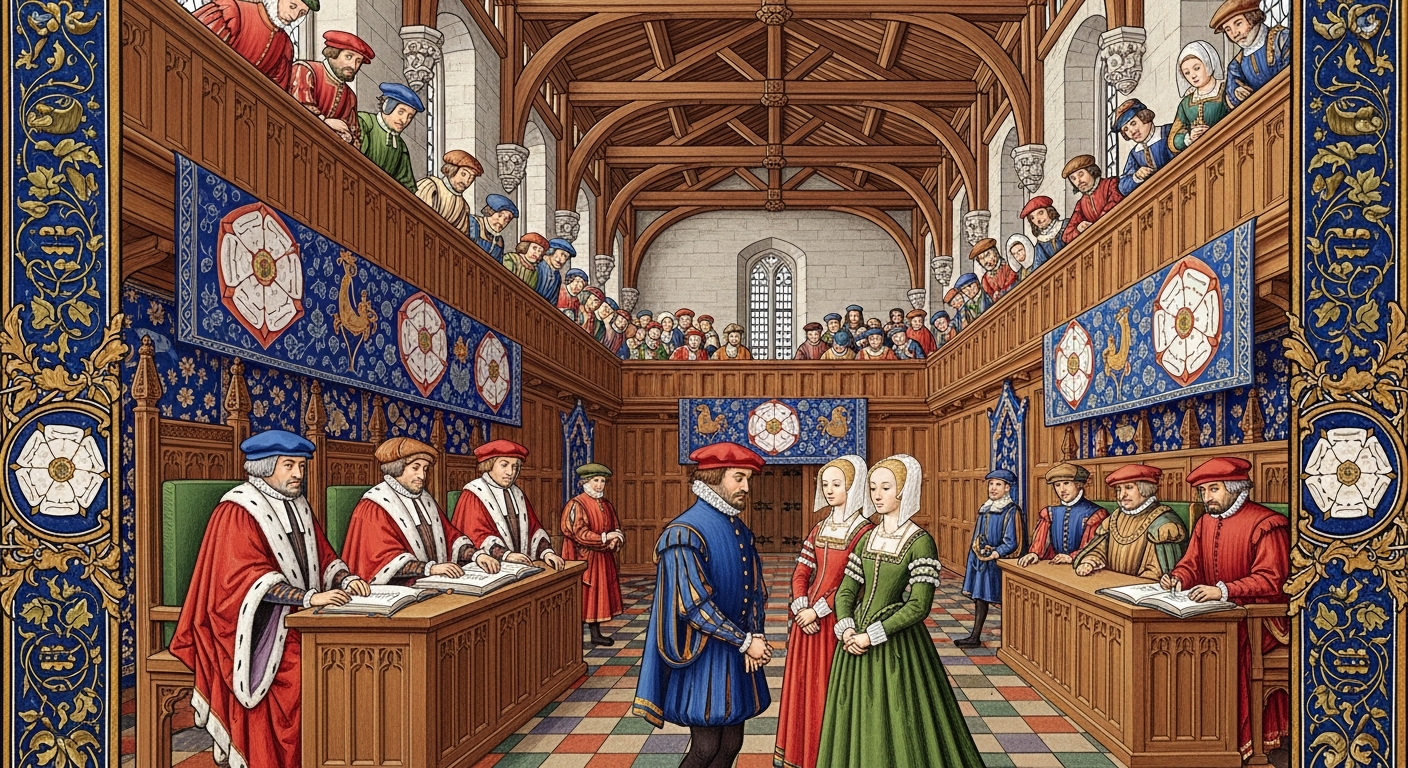
In the spring of 1536, the English court witnessed one of history’s most ruthlessly efficient character assassinations. Within the span of just three weeks, Anne Boleyn, the second wife of Henry VIII, went from being Queen of England to a headless corpse on Tower Green. What makes this episode particularly chilling is not just the speed of her downfall, but the transparent flimsiness of the evidence used against her. Even Eustace Chapuys, the Imperial Ambassador who had spent years despising Anne Boleyn and working against her interests, noted that the charges appeared to be fabricated.
The accusations were sensational by any standard: adultery with five men, including her own brother George Boleyn. Yet the supposed evidence was so weak that it defied belief. How did Henry VIII manage to orchestrate the judicial murder of his wife and five men in a matter of days? The answer reveals much about the dangerous world of Tudor politics, where a king’s whim could become a death sentence with terrifying speed.
This episode remains one of the most studied and debated moments in Tudor history, offering insights into royal power, the machinery of Tudor justice, and the precarious position of women at the highest levels of society. The story of Anne Boleyn’s fall demonstrates how quickly political necessity could transform into legal fiction, and how the Tudor court could become a killing ground for those who had outlived their usefulness.
Historical Background
The key players in this drama read like a who’s who of Henry VIII’s court. At the centre stood Anne Boleyn herself, the ambitious woman who had captivated the King and sparked the English Reformation. Born around 1501, Anne had served at the French court and possessed the sophistication and education that set her apart from many English noblewomen of her time. Her brother George Boleyn, Viscount Rochford, was a courtier and diplomat who had risen high in royal favour alongside his sister.
The other accused men represented different levels of court society. Henry Norris was Groom of the Stool, one of the King’s most intimate servants with unparalleled access to the monarch. Sir Francis Weston was a young courtier from a wealthy family, whilst William Brereton was a Gentleman of the Privy Chamber. Perhaps most tellingly, Mark Smeaton was a court musician, a man of relatively humble birth whose alleged involvement with the Queen seemed particularly implausible given the rigid social hierarchies of the time.
The events unfolded with shocking rapidity in April and May 1536. On 30th April, Mark Smeaton was arrested and allegedly tortured into confession. Within days, the other men were seized, and on 2nd May, Anne Boleyn herself was taken to the Tower of London. The speed of these arrests suggests careful pre-planning rather than the discovery of genuine evidence of wrongdoing.
The charges centred on alleged adultery committed at various royal palaces, including Greenwich, Hampton Court, and Whitehall. According to the indictments preserved in the Letters and Papers, Foreign and Domestic, Henry VIII, the accused encounters supposedly took place on specific dates, but several of these dates can be proven impossible through court records showing Anne was elsewhere at the time. This attention to specific but fabricated details reveals the calculated nature of the accusations.
Significance and Impact
The judicial murder of Anne Boleyn and her alleged co-conspirators marked a turning point in Henry VIII’s reign, demonstrating the King’s willingness to use the full machinery of the state to eliminate inconvenient individuals. This was not merely the removal of an unwanted wife; it was a masterclass in how Tudor royal power could manufacture legal justification for political necessity.
The speed and efficiency of the proceedings sent shockwaves through the English court and across Europe. Within nineteen days of the first arrest, all six defendants were dead. This pace was unprecedented even by Tudor standards, where judicial proceedings typically involved longer deliberation. The message was clear: in Henry VIII’s England, no one, regardless of rank or previous favour, was safe from the King’s displeasure.
For the Boleyn family specifically, the consequences were catastrophic. Thomas Boleyn, Anne’s father and Earl of Wiltshire, saw his influence evaporate overnight. The family’s meteoric rise through Anne’s relationship with Henry was matched only by their spectacular fall. Properties were confiscated, titles became meaningless, and former allies distanced themselves with unseemly haste.
The broader implications for English politics were equally significant. Henry’s actions established a precedent for using treason charges to eliminate political obstacles. Future victims, from Thomas Cromwell to Catherine Howard, would find themselves caught in similar webs of manufactured evidence and predetermined outcomes. The Boleyn case became the template for Tudor judicial murder, refined through practice into a terrifyingly effective tool of royal control.
Connections and Context
The timing of Anne Boleyn’s fall cannot be separated from other crucial developments in 1536. Henry’s growing infatuation with Jane Seymore provided the personal motivation for removing Anne, but political factors were equally important. The Pilgrimage of Grace later that year would demonstrate the religious tensions created by Henry’s break with Rome, tensions that were partly blamed on Anne’s influence over religious policy.
Thomas Cromwell, Henry’s chief minister, played a crucial role in orchestrating the charges against Anne Boleyn. Contemporary sources suggest that Cromwell and Anne had clashed over policy matters, particularly regarding the dissolution of the monasteries and England’s foreign policy. Cromwell’s involvement in Anne’s downfall was a masterpiece of political calculation, eliminating a rival whilst providing the King with his desired outcome.
The European context also mattered enormously. Emperor Charles V, nephew to Catherine of Aragon, had been threatening England over Henry’s treatment of his first wife. By removing Anne Boleyn, Henry hoped to improve relations with the Imperial court and reduce the threat of foreign intervention in English affairs. Eustace Chapuys’ correspondence, preserved in various archives, shows how European diplomats viewed these events as fundamentally political rather than judicial.
Modern Relevance and Fascinating Details
The story of Anne Boleyn’s fall continues to fascinate modern audiences because it combines personal drama with broader themes about power, gender, and justice that remain relevant today. The case raises uncomfortable questions about how legal systems can be manipulated to serve political ends, questions that resonate in contemporary discussions about judicial independence and the rule of law.
One particularly intriguing aspect often overlooked is the role of court gossip and sexual politics in building the case against Anne. The indictments relied heavily on testimony about private conversations and supposed romantic encounters, highlighting how personal relationships at court could become matters of life and death. The accusations against Mark Smeaton, in particular, reveal the dangers faced by those of lower social status who found themselves caught up in royal politics.
Archaeological evidence has added fascinating details to our understanding of these events. Recent analysis of the Tower of London has revealed more about the conditions in which the accused were held, whilst study of contemporary documents has uncovered previously unknown details about the legal proceedings. Retha Warnicke’s scholarship has been particularly valuable in separating historical fact from later romanticisation of Anne Boleyn’s story.
The enduring popularity of Anne Boleyn in historical fiction, from Philippa Gregory’s novels to television series like ‘The Tudors’, demonstrates how these events continue to capture public imagination. However, popular culture often overlooks the methodical nature of Henry’s campaign against his second wife, focusing on romance rather than the calculated political destruction that actually occurred.
Conclusion
The fall of Anne Boleyn stands as one of history’s most chilling examples of how quickly and completely powerful individuals can orchestrate the destruction of their enemies. The flimsiness of the evidence, noted even by contemporary observers who disliked Anne, reveals the extent to which Henry VIII was willing to pervert justice to achieve his goals. Within three weeks, six people lost their lives in what can only be described as judicial murder on a grand scale.
For students of Tudor history, this episode provides crucial insights into the mechanisms of royal power and the precarious nature of court life. It demonstrates how legal procedures could be manipulated to provide a veneer of legitimacy for predetermined outcomes, and how quickly fortune could change in Henry VIII’s England. The speed and efficiency of the proceedings created a template for future royal eliminations that would be used repeatedly throughout Henry’s reign. Understanding these events helps illuminate not just the fate of one remarkable woman, but the brutal realities of power politics in one of England’s most transformative historical periods.