
Introduction
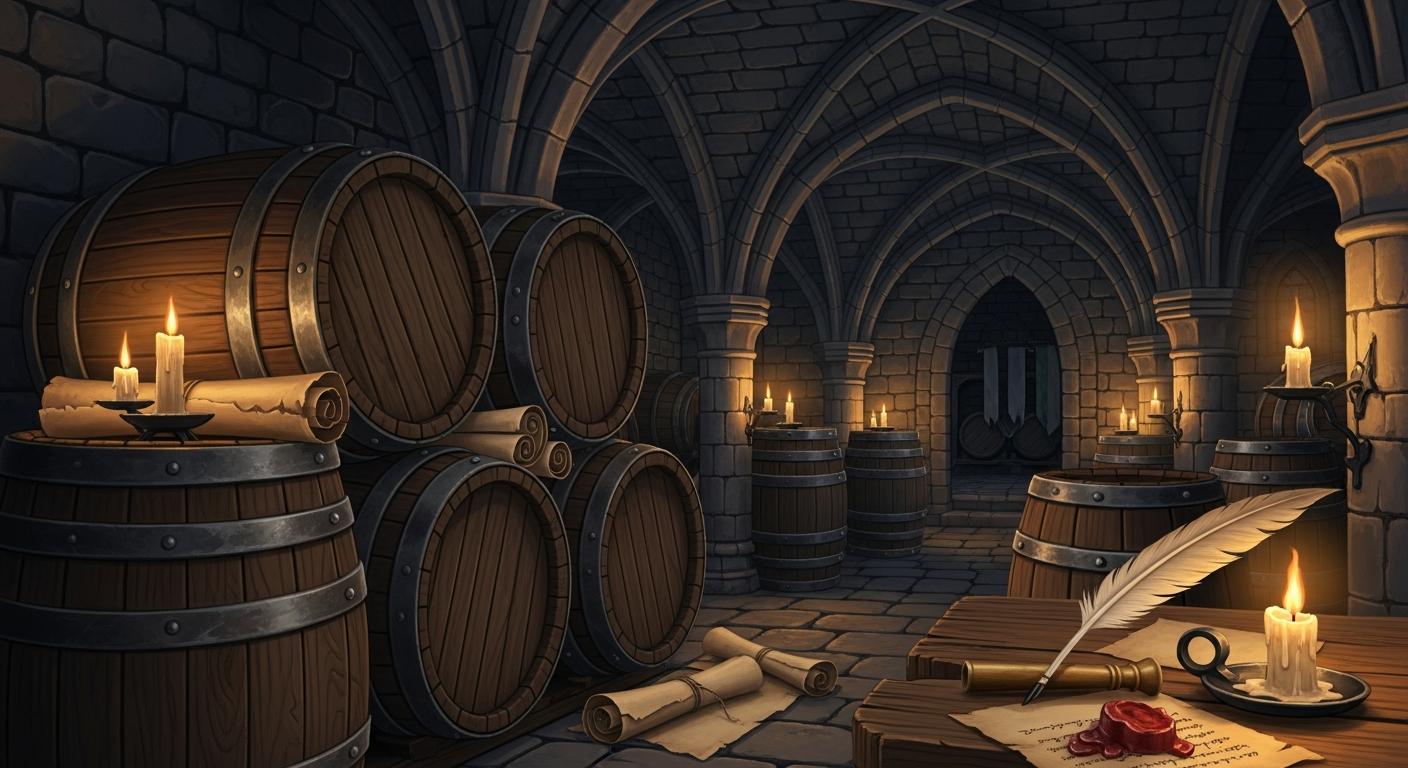
In the summer of 1586, a seemingly ordinary delivery of beer barrels to Chartley Hall in Staffordshire would change the course of English history forever. Hidden within these innocent-looking containers were secret letters that would expose one of the most dangerous conspiracies against Elizabeth I’s reign and seal the fate of Mary Queen of Scots. The mastermind behind this extraordinary intelligence operation was Francis Walsingham, Elizabeth’s spymaster, whose network of agents and codebreakers had laid an elaborate trap that would finally provide the evidence needed to eliminate the Catholic threat to the Protestant throne.
This was the Babington Plot of 1586, a conspiracy that combined religious fanaticism, international intrigue, and cutting-edge espionage techniques. The plot represented the culmination of nearly two decades of Catholic attempts to remove Elizabeth I from the throne and restore England to the Catholic faith. What makes this particular conspiracy so fascinating is not just its dramatic conclusion, but the sophisticated intelligence operation that Walsingham orchestrated to expose it.
The story of the Babington Plot reveals the dangerous world of Tudor espionage, the complex relationship between Elizabeth and her imprisoned cousin Mary, and the lengths to which England’s Protestant government would go to protect itself from Catholic conspiracies. Most remarkably, it demonstrates how a brilliant spymaster used deception, patience, and innovative methods to turn a deadly threat into the very weapon that would destroy his enemies.
Historical Background
The Babington Plot takes its name from Anthony Babington, a young Catholic gentleman from Derbyshire who became the unwitting figurehead of this conspiracy. Born into a wealthy Catholic family around 1561, Babington had served as a page to the Earl of Shrewsbury during Mary Queen of Scots’ captivity at Sheffield Castle in the 1570s. This early exposure to the deposed Scottish queen had left him with romantic notions of her cause and a burning desire to see her restored to freedom.
By 1586, Mary had been Elizabeth’s prisoner for eighteen years, ever since she fled Scotland following her abdication in 1567. As a Catholic with a strong claim to the English throne, Mary represented a constant threat to Elizabeth’s Protestant settlement. Previous plots, including the Ridolfi Plot of 1571 and the Throckmorton Plot of 1583, had already demonstrated the danger she posed, but Elizabeth had resisted calls for her execution, partly due to their family relationship and partly because of the diplomatic complications that would arise from executing an anointed queen.
The plot that emerged in 1586 was more serious than its predecessors. Babington had been approached by John Ballard, a Jesuit priest who had recently returned from France with promises of foreign support for a Catholic uprising. The conspiracy involved six key elements: the assassination of Elizabeth I, the rescue of Mary Queen of Scots, a foreign invasion supported by Spain and France, a domestic Catholic uprising, the restoration of the Catholic faith, and Mary’s installation as queen of England.
What the conspirators did not realise was that Francis Walsingham had been aware of their activities from the very beginning. His extensive network of spies, informants, and double agents had infiltrated Catholic circles throughout England and Europe. The Calendar of State Papers relating to Scotland and Mary, Queen of Scots reveals the extraordinary detail with which Walsingham tracked every aspect of the developing conspiracy, allowing it to proceed just far enough to gather the evidence he needed whilst ensuring that Elizabeth remained safe.
Significance and Impact
The Babington Plot’s exposure had profound and lasting consequences for Tudor England. Most immediately, it provided Elizabeth with the political justification she needed to order Mary’s execution. For nearly two decades, Elizabeth had resisted pressure from her councillors and Parliament to eliminate the Scottish queen, but the discovery of Mary’s letter explicitly approving Elizabeth’s assassination finally made the decision unavoidable. The evidence was so damning that even Elizabeth’s natural reluctance to execute a fellow queen could not overcome the political necessity.
The plot’s revelation also marked a turning point in English Catholics’ relationship with the state. The savage executions of Babington and his fellow conspirators in September 1586, where they were subjected to the full horrors of hanging, drawing, and quartering, sent a clear message about the consequences of treason. The conspiracy confirmed Protestant fears about Catholic loyalty and led to increased persecution of recusants throughout Elizabeth’s remaining years.
Perhaps most significantly, the Babington Plot demonstrated the effectiveness of Walsingham’s intelligence network and established England as a pioneer in modern espionage techniques. As Stephen Budiansky notes in ‘Her Majesty’s Spymaster’, Walsingham’s methods, including the use of double agents, code-breaking, and surveillance, would influence intelligence operations for centuries to come. The success of the operation showed how information could be weaponised and how patient intelligence work could neutralise threats that military force alone could not address.
The plot’s exposure also had international ramifications. It further damaged England’s already strained relationship with Spain and the Papacy, contributing to the developing crisis that would culminate in the Spanish Armada of 1588. Philip II of Spain had been peripherally involved in supporting the conspiracy, and its failure, combined with Mary’s subsequent execution, removed any lingering diplomatic constraints on Spanish aggression against England.
Connections and Context
The Babington Plot cannot be understood in isolation but must be seen as part of the broader context of the European Counter-Reformation and the struggle between Protestant and Catholic powers. The 1580s were a particularly dangerous decade for Elizabeth’s England, with the country facing threats from multiple directions: Spanish expansion in the Netherlands, the aftermath of the papal bull excommunicating Elizabeth, and the arrival of Jesuit missionaries trained to reconvert England to Catholicism.
The timing of the plot was no coincidence. In 1585, England had openly intervened in the Dutch Revolt against Spanish rule, effectively declaring war on the most powerful Catholic nation in Europe. The same year saw the passage of the Act against Jesuits and Seminary Priests, making it treasonable for English-born Catholic priests to remain in the country. These escalating tensions created an atmosphere in which desperate measures seemed justified to both sides.
The plot also connects to the broader story of Mary Queen of Scots’ captivity and the various schemes that surrounded her during her eighteen years in English hands. From the moment of her arrival in 1568, Mary had been the focus of Catholic hopes and Protestant fears. The succession of plots associated with her name, from Ridolfi through Throckmorton to Babington, shows the persistent nature of the threat she represented and the increasingly sophisticated methods developed to counter it.
Modern Relevance and Fascinating Details
The story of the Babington Plot continues to fascinate modern audiences because it reads like a spy thriller centuries before the genre existed. The image of secret messages hidden in beer barrels captures the imagination and demonstrates that espionage has always required creativity and ingenuity. Modern intelligence agencies still study Walsingham’s methods, particularly his use of double agents and his patience in allowing plots to develop before moving to neutralise them.
One of the most remarkable aspects of the operation was Walsingham’s use of Gilbert Gifford, a double agent who had convinced Mary’s supporters that he was working for her cause whilst actually reporting everything to the English government. Gifford established the entire communication system that allowed Mary to correspond with the conspirators, meaning that every letter was read by Walsingham’s codebreakers before reaching its intended recipient. This level of deception required extraordinary planning and nerve.
The plot has appeared in numerous works of historical fiction and popular history, often focusing on the dramatic contrast between the young, idealistic conspirators and the calculating spymaster who destroyed them. The story raises enduring questions about the morality of intelligence work, the balance between security and civil liberties, and the extent to which governments should go to protect themselves from perceived threats. These themes resonate strongly in our modern world of surveillance and counter-terrorism.
Did you know that the cipher used by Mary and the conspirators was actually quite sophisticated for its time, involving both letter substitution and null characters designed to confuse codebreakers? Unfortunately for them, Walsingham employed Thomas Phelippes, one of Europe’s finest cryptanalysts, who broke their codes with relative ease and even forged additional passages to entrap Mary further.
Conclusion
The Babington Plot of 1586 represents a pivotal moment in Tudor history, combining high-stakes political intrigue with innovative espionage techniques. Francis Walsingham’s masterful handling of the conspiracy not only saved Elizabeth’s life but also provided the evidence necessary to eliminate the most persistent threat to her reign. The plot’s exposure led directly to Mary Queen of Scots’ execution in February 1587, removing a focal point for Catholic resistance and clearing the way for England’s emergence as a major Protestant power.
The legacy of the Babington Plot extends far beyond its immediate political consequences. It established principles of intelligence gathering and counter-espionage that would influence security services for centuries to come. For students of Tudor history, the plot offers a fascinating glimpse into the dangerous world of sixteenth-century politics, where religious difference could mean the difference between life and death, and where the survival of kingdoms might depend on the ability to read other people’s mail. The beer barrels of Chartley Hall had delivered far more than anyone expected, changing the course of English history forever.