
Events in Tudor history that are represented in the Predestination series
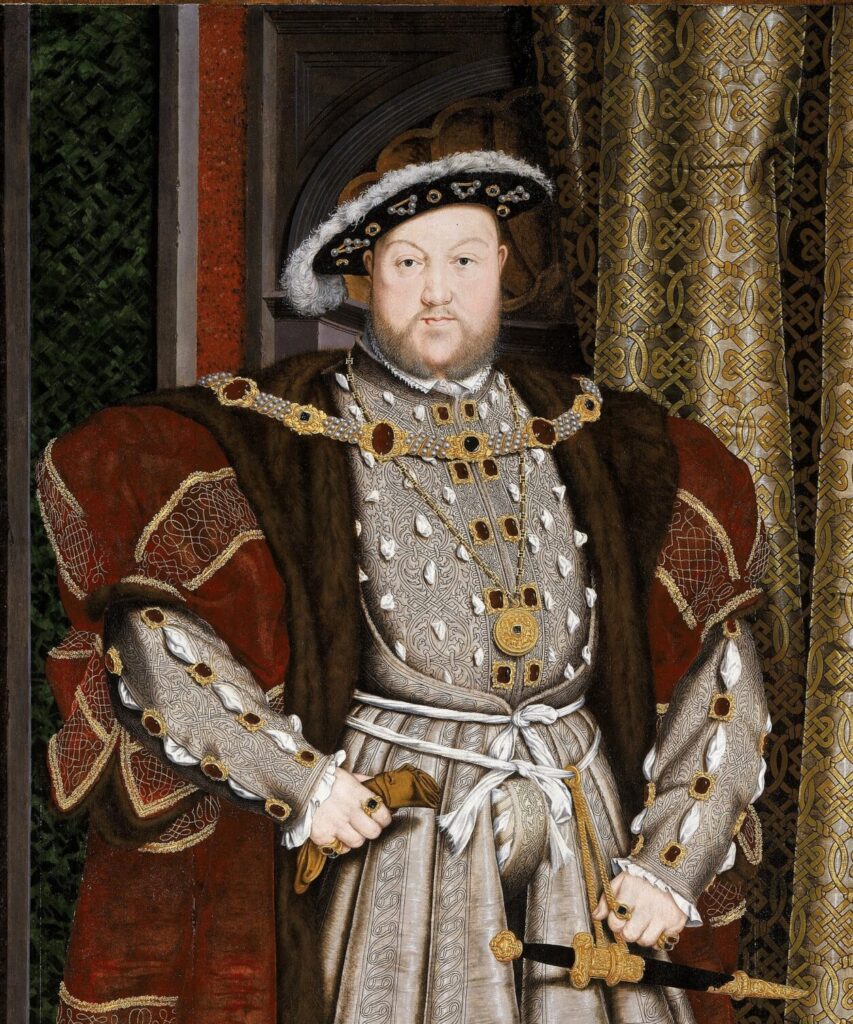
Tudor history
1491 – 1547
Henry VIII’s reign started when he was just 17, in 1509.
Initially he showed great promise and was beloved by the population; he was an attractive, physically imposing, learned, and cultured man. His renaissance court reflected his personality.
A jousting accident is thought to have resulted in a head injury that brought mood swings and an ulcerating leg wound. Over the years, these turned the revered Tudor prince into an angry, overweight, tyrant.
He is infamous for having a series of six wives in his quest for a male heir, and for starting the English Reformation, the split from Rome, and for directing the dissolution of the monasteries.
Predestination series
The marketplace is saturated with fiction and non-fiction that focusses on the turbulent times of Henry VIII – so I decided to skip it!
If you want Tudor mysteries during Henry’s reign you can do no better than reading the incomparable C.J.Sansom’s Shardlake series.
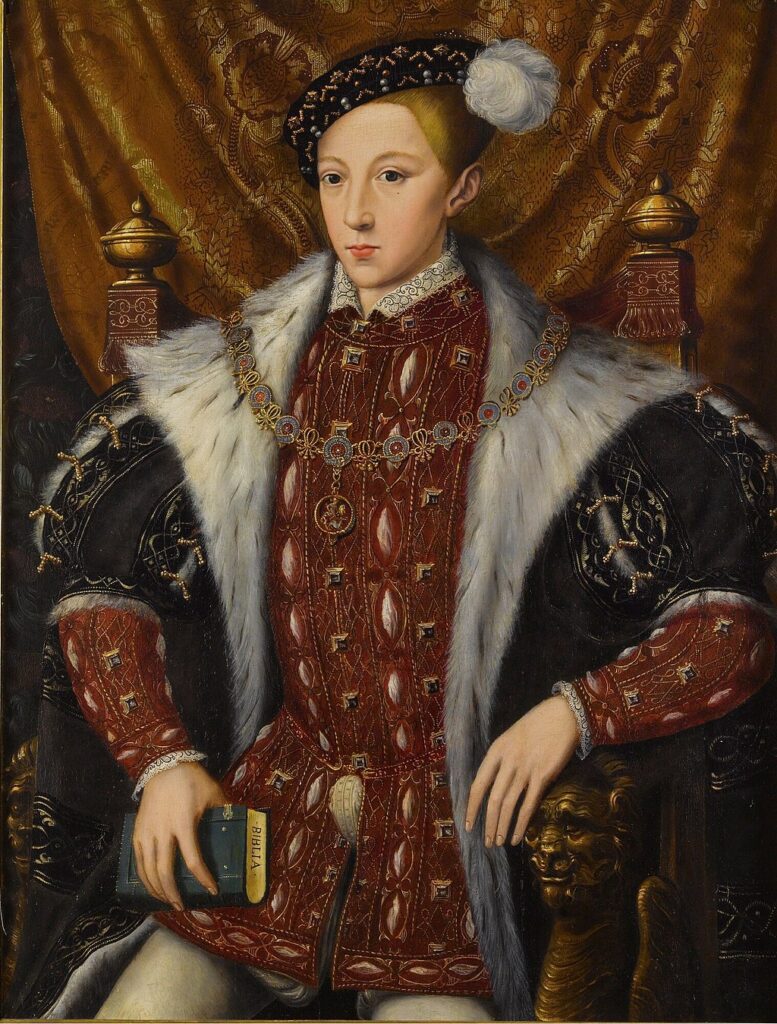
1547 – 1553
Edward VI reigned from the death of his father in 1547 when he was just 9 years old, until his prematurely early death, probably from tuberculosis, in 1553.
Some histories suggest he was a sickly child, but this is disputed. What everyone does agree on, is that he was impressively well educated and sincerely Protestant.
Henry VIII’s will named 16 executors who were to form a regency council to collectively guide King Edward during his minority. The ink was barely dry before Edward Seymour (the brother of Jane Seymour, Edward VI’s mother) manoeuvred himself to lead the council and be termed Lord Protector.
Divination
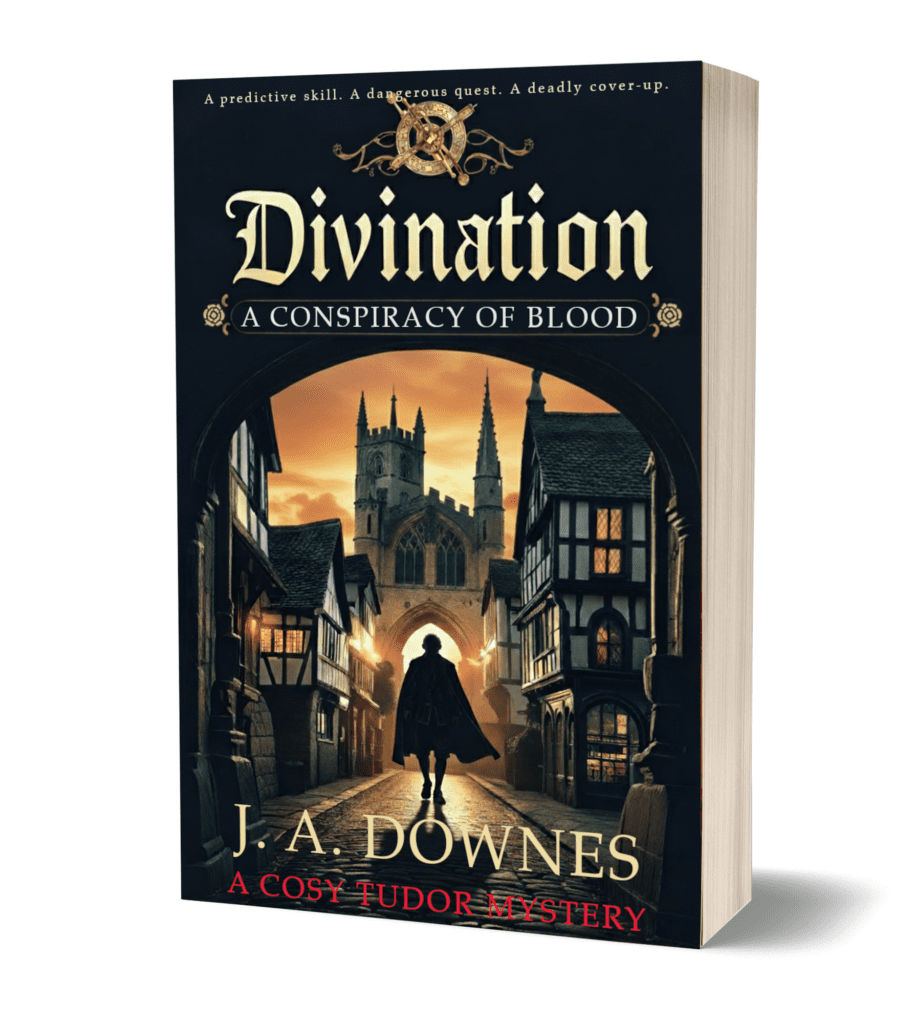
Divination is set in April 1547, during the earliest part of Edward’s regency. It focusses on Thomas Seymour’s jealousy of the power and influence that his brother, the Lord Protector, had. Despite being appointed as Lord Admiral and being made a Baron he still sought to unseat his brother.
Tactics Thomas used include: trying to exert influence over the young king, marrying the old king’s widow (Catherine Parr), doing deals with pirates, and even fomenting rebellion.
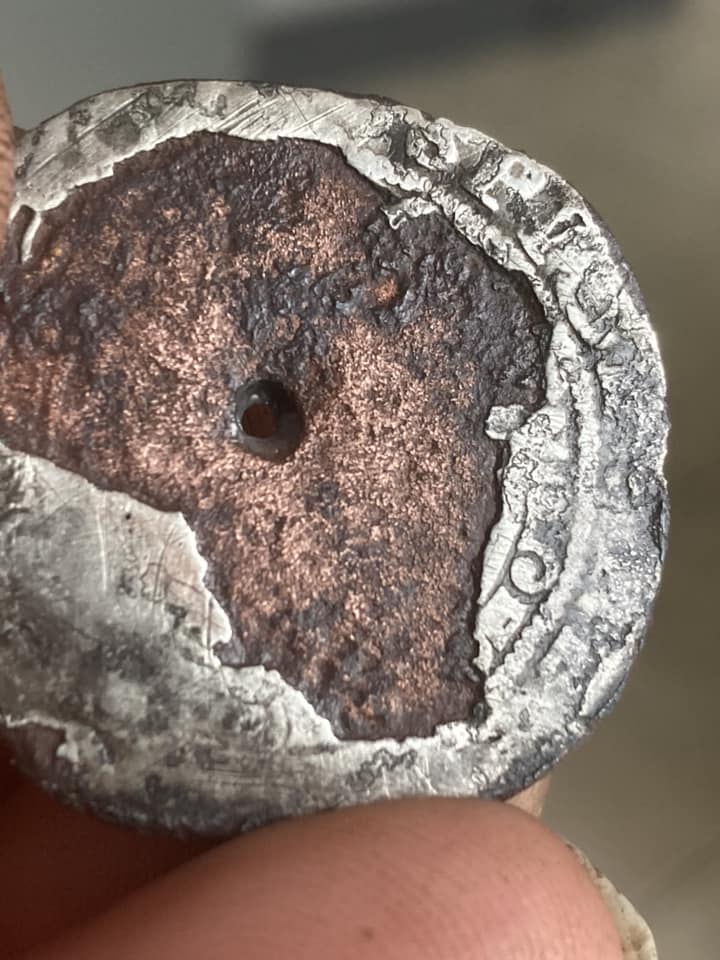
The Great Debasement (1544–1551)
Henry VIII inherited a full treasury from his frugal father (Henry VII), but spent it lavishly on castles, entertainment, and foreign wars.
He spent so much that the treasury was basically broke. To raise money Henry (and subsequently Edward) debased the currency. The amount of gold in gold coins was reduced from 23 karats to 20 karats and the amount of silver in silver coins was reduced from 92.5% to a low of 25% during Edward’s reign. Some coins were even a base of copper with a thin silver coating!
Although the policy was revoked in 1551 the effects continued until 1560 when the last of the debased currency was removed from circulation.
The effect of debasement was the same then as it is today (eg when the central bank prints more fiat currency) – the value of the cash in your hand is reduced. This is great if you’re trying to make your debt evaporate, but if you have savings or a fixed income it is terrible.
Speculation
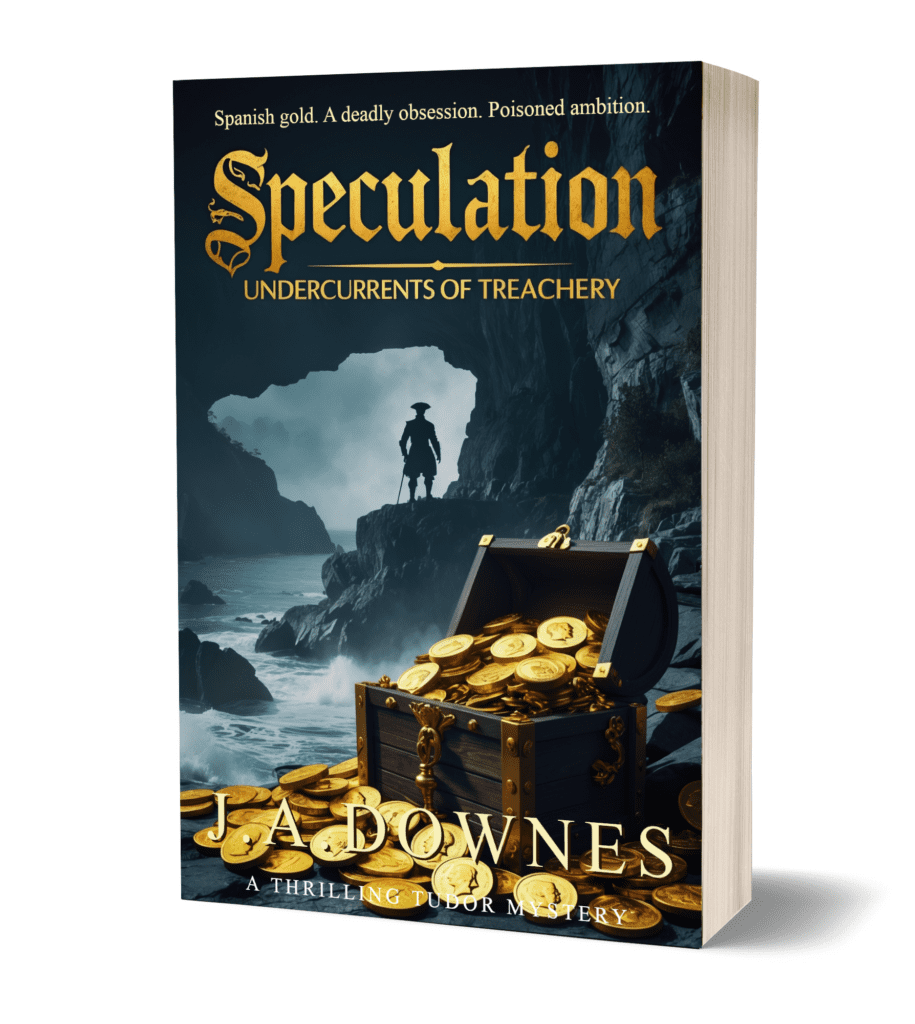
Speculation, (set in Oct/Nov 1548) is centred on the currency crisis of the Tudor era, brought on by the currency debasement started by Henry VIII and continued by Edward’s council.
The story starts by showing the real world impact of debasement, and then explores a fictional adventure as the nobles desperately try to solve the problem whilst improving their own fortunes.
Spring 1549 – The Fall of Thomas Seymour
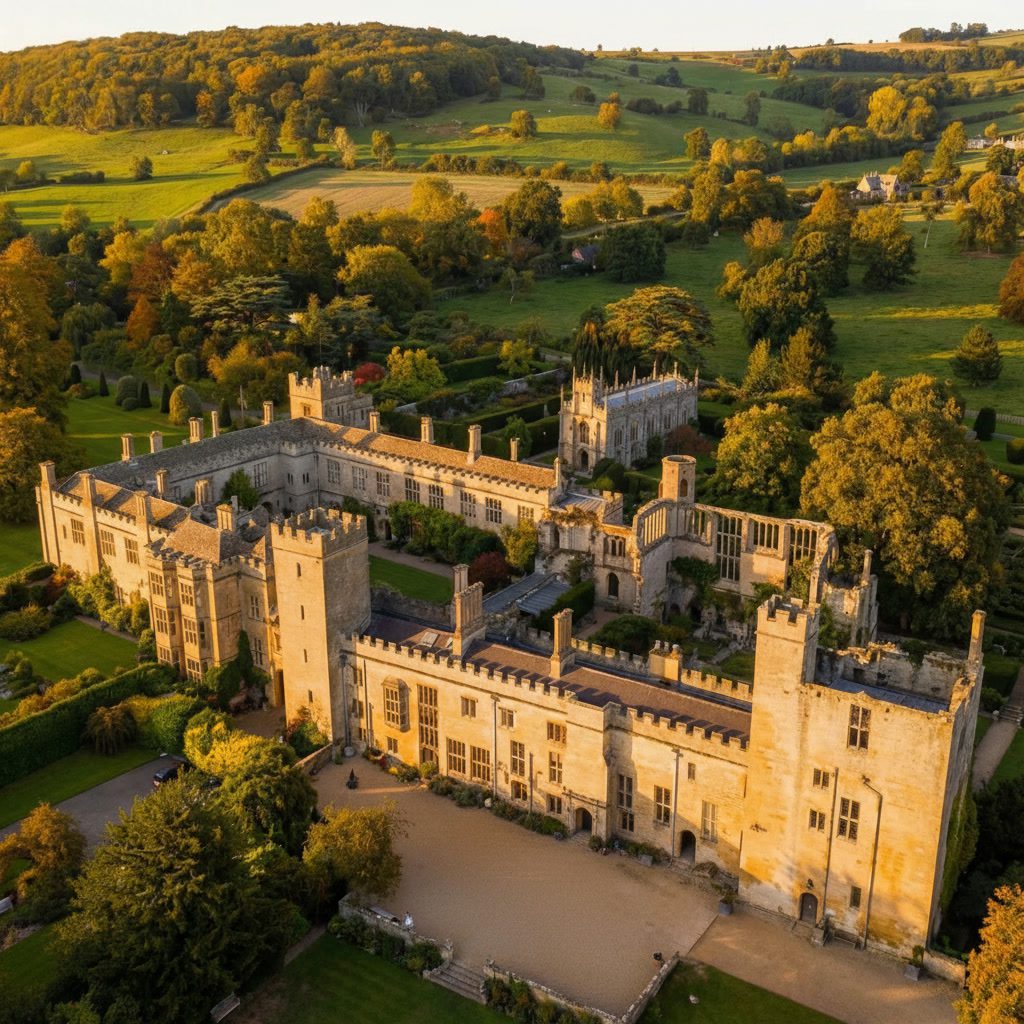
Thomas Seymour, Lord Admiral and brother of the Lord Protector Edward Seymour, had long chafed at his brother’s dominance over the young king. Ambitious, reckless, and fatally overconfident, he pursued a campaign to undermine the Protectorate through a series of increasingly desperate schemes: courting the young Princess Elizabeth, seeking control of the king’s finances, and accumulating weapons and men at Sudeley Castle.
In January 1549 he made his final, catastrophic miscalculation: he was arrested attempting to break into the King’s bedchamber at Hampton Court, a pistol in his hand. He was charged with thirty-three counts of treason, condemned by attainder without trial, and executed on Tower Hill in March 1549. Even his own brother signed the death warrant.
Edward VI noted in his diary simply: “The Lord Seymour of Sudeley was beheaded upon Tower Hill.” He was nine years old.
Restitution
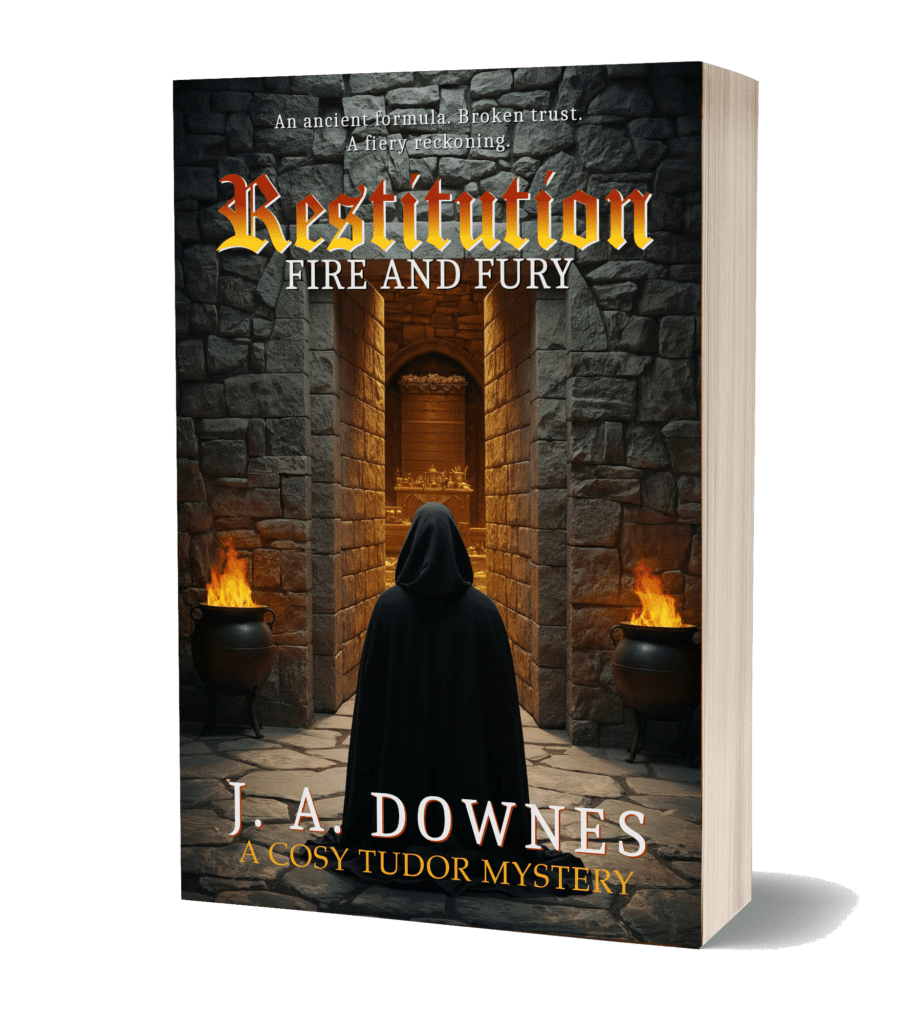
Restitution (early 1549) is set at Sudeley Castle after Thomas Seymour’s execution.
There really was a vicious rivalry between Catherine Parr and Anne Seymour, wife of the Lord Protector, who felt she, not a dowager queen, should take precedence at court and wear the queen’s jewels.
Apparently the dowager Queen Catherine Parr’s jewels “went missing” for a few weeks, before turning up at the Tower of London. The missing jewels were the genesis for my plot. Where did the jewels disappear to? How and by whom were they recovered?
Plus, I just had to include the pneumatic Temple Door concept from Hero of Alexandria’s book: Pneumatica.
Summer–Winter 1549 – Kett’s Rebellion and its Aftermath
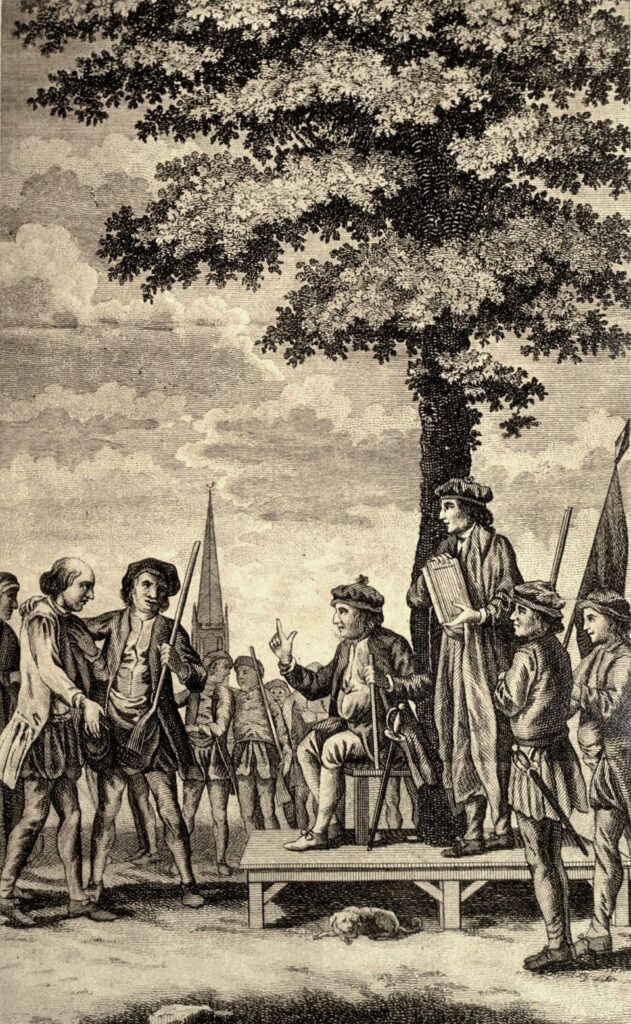
In the summer of 1549, England erupted. Enclosure (the practice of wealthy landowners fencing off common land that ordinary people had farmed for generations) had been driving rural communities to destitution for decades. In Norfolk, a tanner named Robert Kett became the unlikely leader of a rebellion that would grow to nearly 16,000 men, establishing a vast camp on Mousehold Heath outside Norwich.
Kett’s rebels were not anarchists – they were remarkably disciplined, holding courts under an oak tree they called the Oak of Reformation, dispensing justice and petitioning the Crown for relief. They captured Norwich, England’s second largest city, and held it for six weeks.
The government’s first attempt to suppress the rebellion failed badly. It took the Earl of Warwick, John Dudley, with a professional army including German and Italian mercenaries to finally crush it at the Battle of Dussindale in August 1549. Around 3,000 rebels died. Robert Kett was captured, tried for treason, and hanged from the walls of Norwich Castle in December 1549, alongside his brother William.
The aftermath was brutal and far-reaching. The rebellion, coming simultaneously with the Prayer Book Rebellion in the West Country, fatally undermined Edward Seymour’s Protectorate. Within weeks, John Dudley had manoeuvred Seymour from power entirely. England had a new ruler in all but name, and the political landscape that John Dee navigated had shifted dramatically.
Absolution
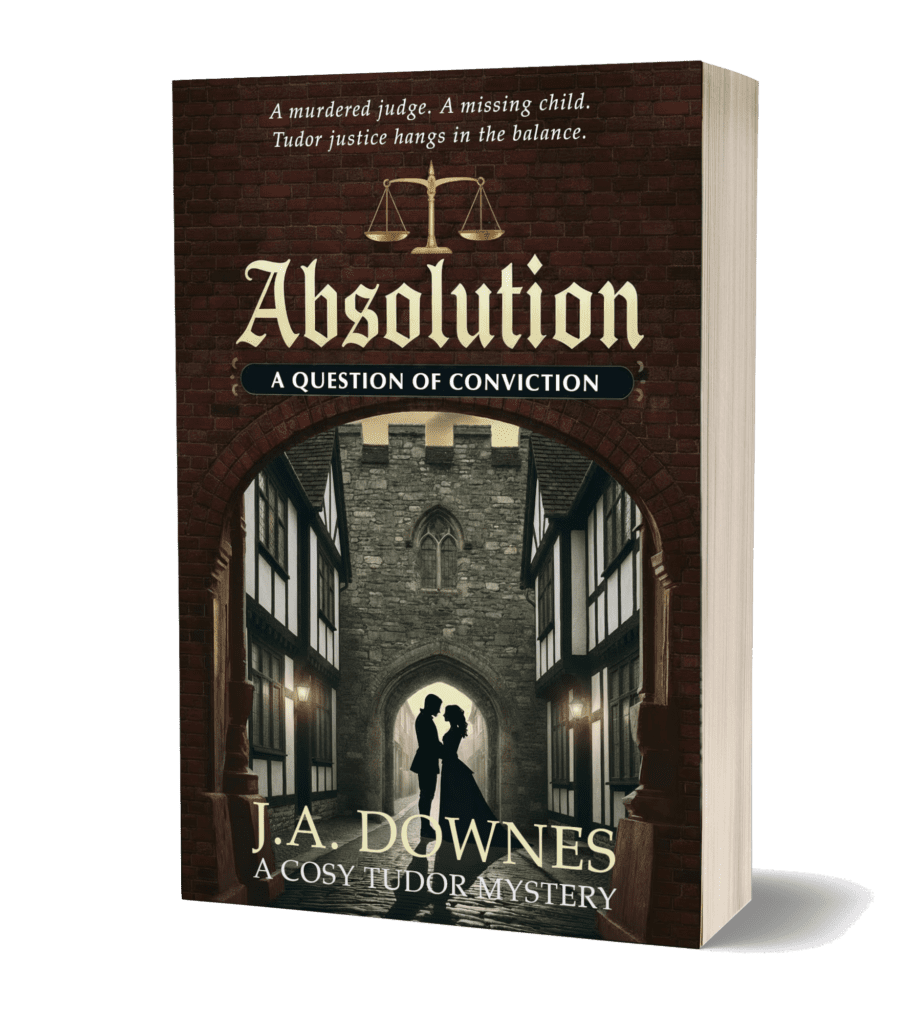
I wrote Absolution a year after finishing Insurrection. I didn’t want to focus on the rebellion itself, so chose to centre the plot around one plausible aftermath; corruption involving falsely accused rebel sympathisers, leaning heavily into Roman history (Sulla’s proscriptions) and modern day ‘grooming scandals’.
Additionally, it was time for Catherine Brandon to bow out of the series (at least for the time being) as in real life she married Richard Bertie, bore him two children (Susan and Peregrine) and took exile from the Marian regime on the continent.

Dee’s foreign education (1548-1550)
John Dee studied voraciously at St John’s college, Cambridge, from 1542 to 1546.
His skills were recognised and he was made an original fellow of Trinity College, Cambridge, in 1546.
He travelled to Europe, specifically Louvain (in 1548 and again in 1550) and lectured in Paris on Euclid. Whilst in Louvain he studied cartography with Gemma Frisius and Gerardus Mercator.
When he returned to England he brought with him a collection of astronomical instruments and terrestrial globes.
Resurrection
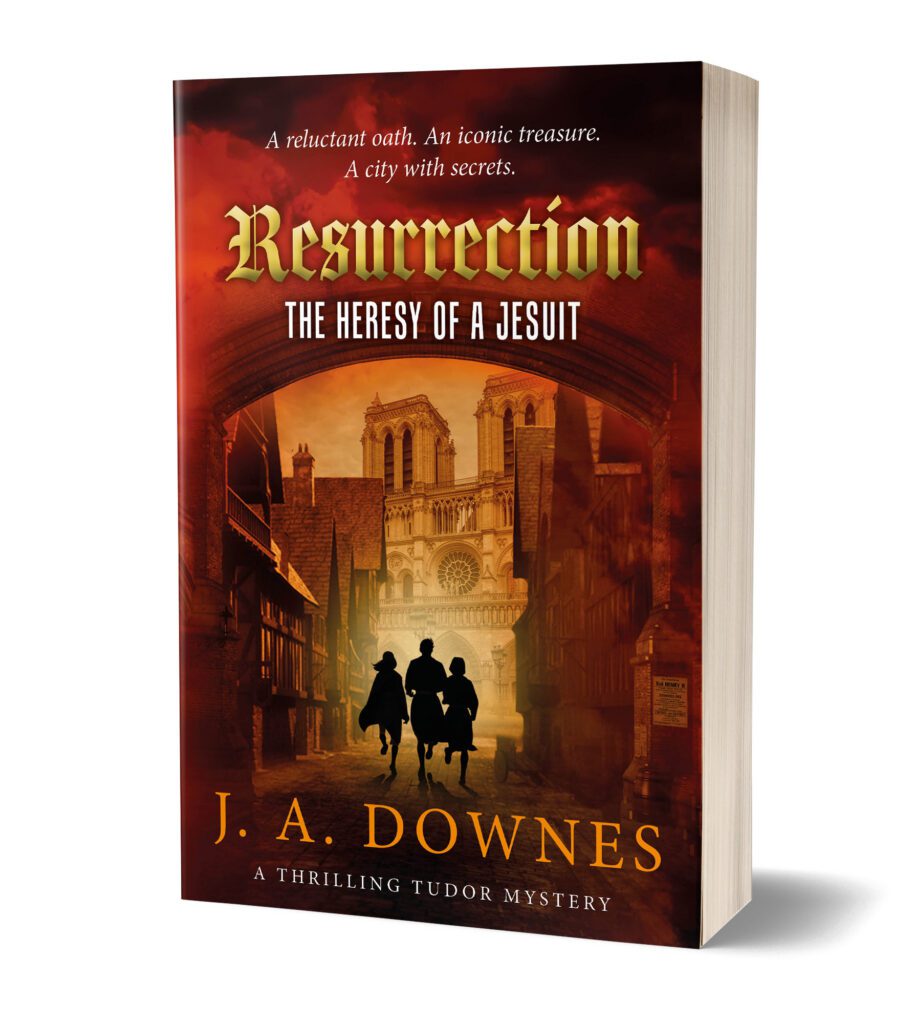
Resurrection is set between June & September 1550).
We know that Dee travelled from Louvain (Leuven) to Paris and gave a lecture on Euclid. But history doesn’t tell us why. This is the niche that I exploit in Resurrection, creating a reason for the journey and an adventure around that.
Resurrection is also an homage to Dashiell Hammett’s work, “The Maltese Falcon”.
Edward’s demise 1553
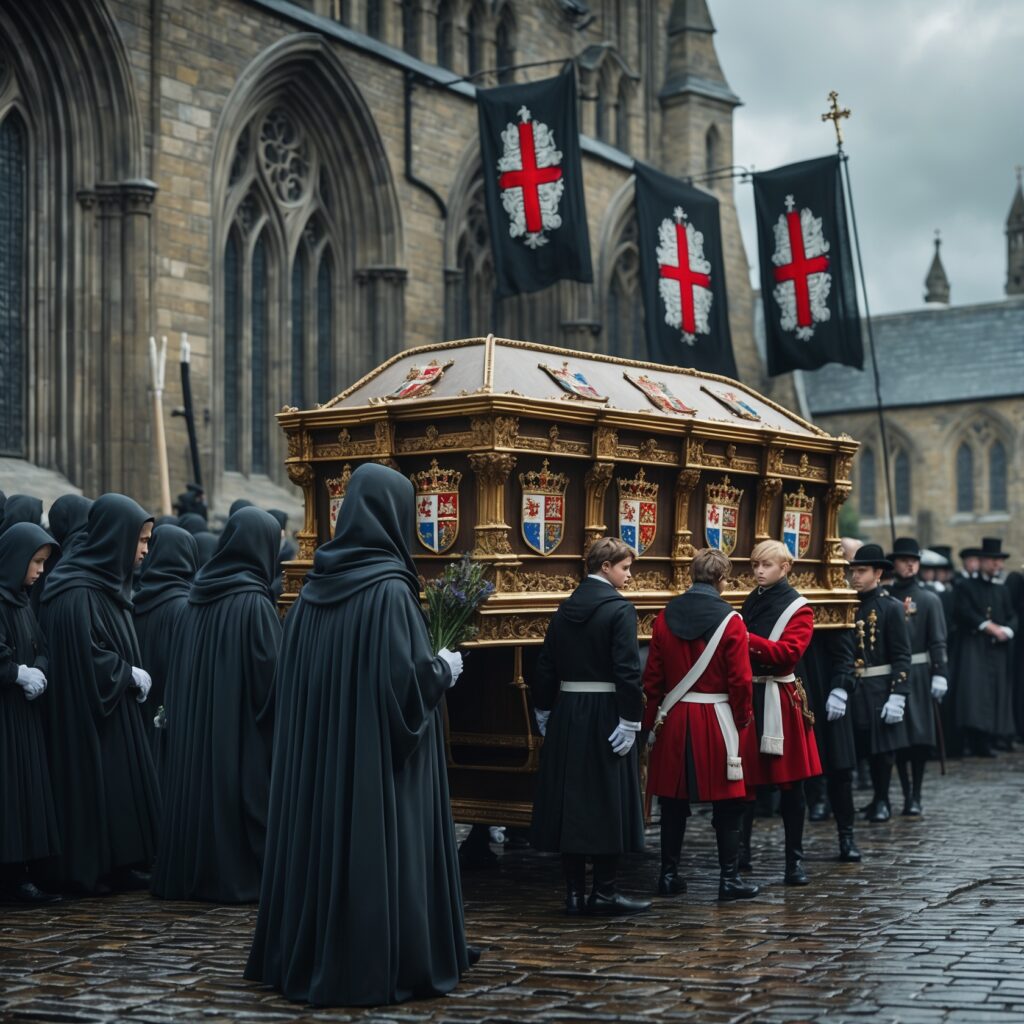
In 1553, Edward was seriously ill and famously created a will, or as he called it, a ‘Devise for the succession’, to ensure his successor was Protestant.
As Edward’s health waxed and waned, we can only imagine the frantic repositioning of loyalties amongst the nobility; the monarch’s goodwill meant power and fortune, and the opposite could mean incarceration in the Tower of London…or worse!
As his health declined his doctors gave up hope. It is said that they even allowed an old woman who claimed to have a cure to give him potions, but this only made Edward worse.
It was a slow and painful death.
Predestination
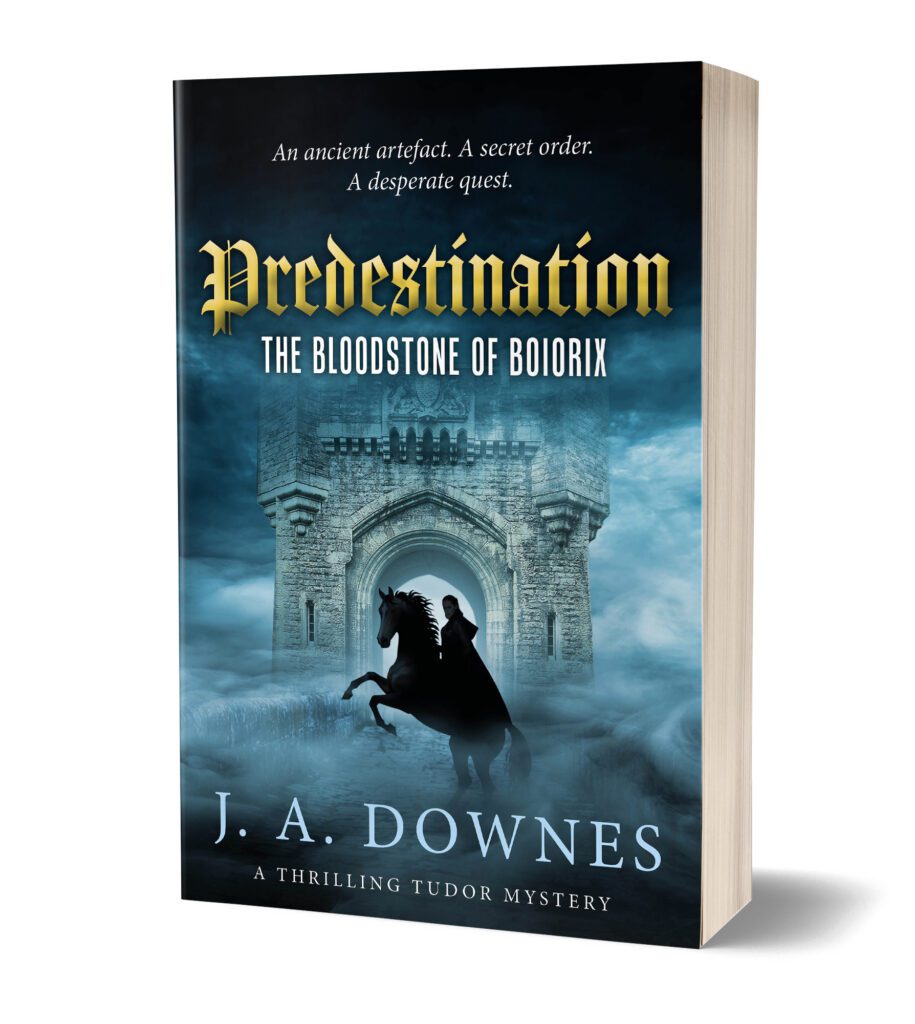
Predestination, the first book of the series, is set between October 1551 and July 1553. It starts with the Reformed religion excitement/turmoil of Edward’s reign, and ends with Edward’s death.
Along the way we have the well-documented meeting of two of the sixteenth century’s greatest polymaths: John Dee of England and Gerolamo Cardano of Pavia & Padua. They are said to have discussed a magical gem and a perpetual motion machine.
Our heroes find a reference to a magical health-giving gem (which would be useful to Edward!) and follow a series of clues from Kent to London and finally to Norfolk as they search for it.
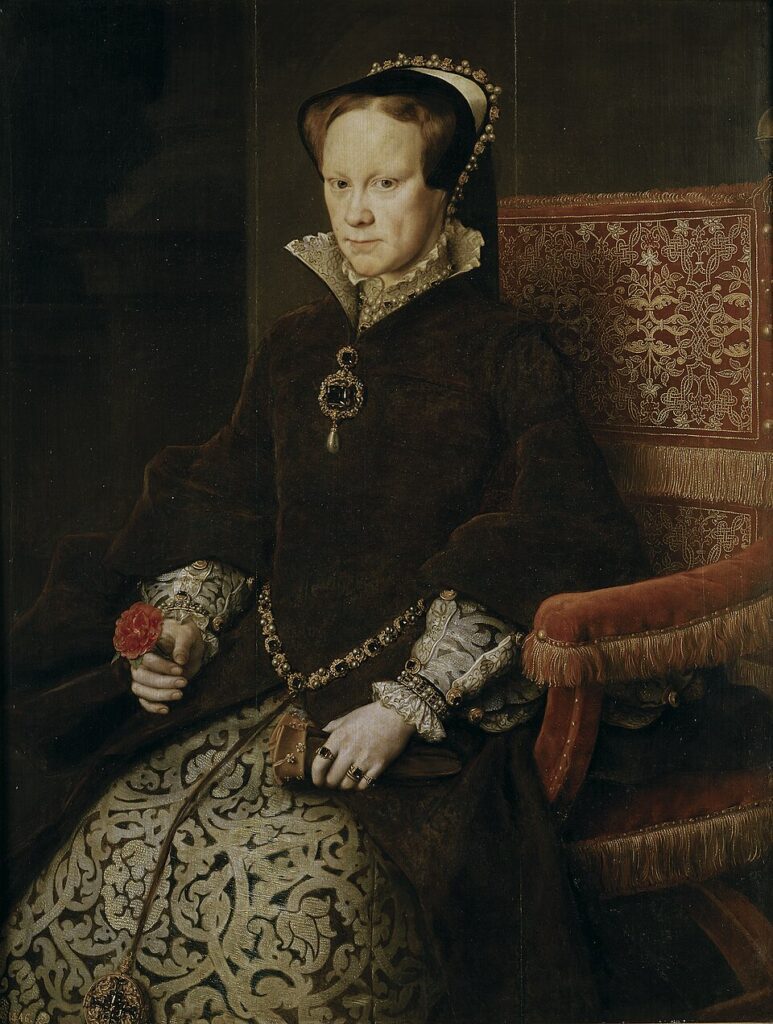
The year of three monarchs – 1553
The privy council tried to implement Edward’s devise for the succession, by proclaiming Jane Grey as the Queen.
Famously her reign lasts only nine days, until her councillors dramatically switch sides and back Mary’s claim to the throne.
There is scholarly debate as to whether Edward’s devise was legally binding or not. On the one hand, he was the King! So his wish should be enough. On the other hand he was still a minor and did not get the devise ratified by parliament.
Regardless, the country’s population had been expecting Mary to inherit the crown and largely that expectation carried the day.
Proclamation
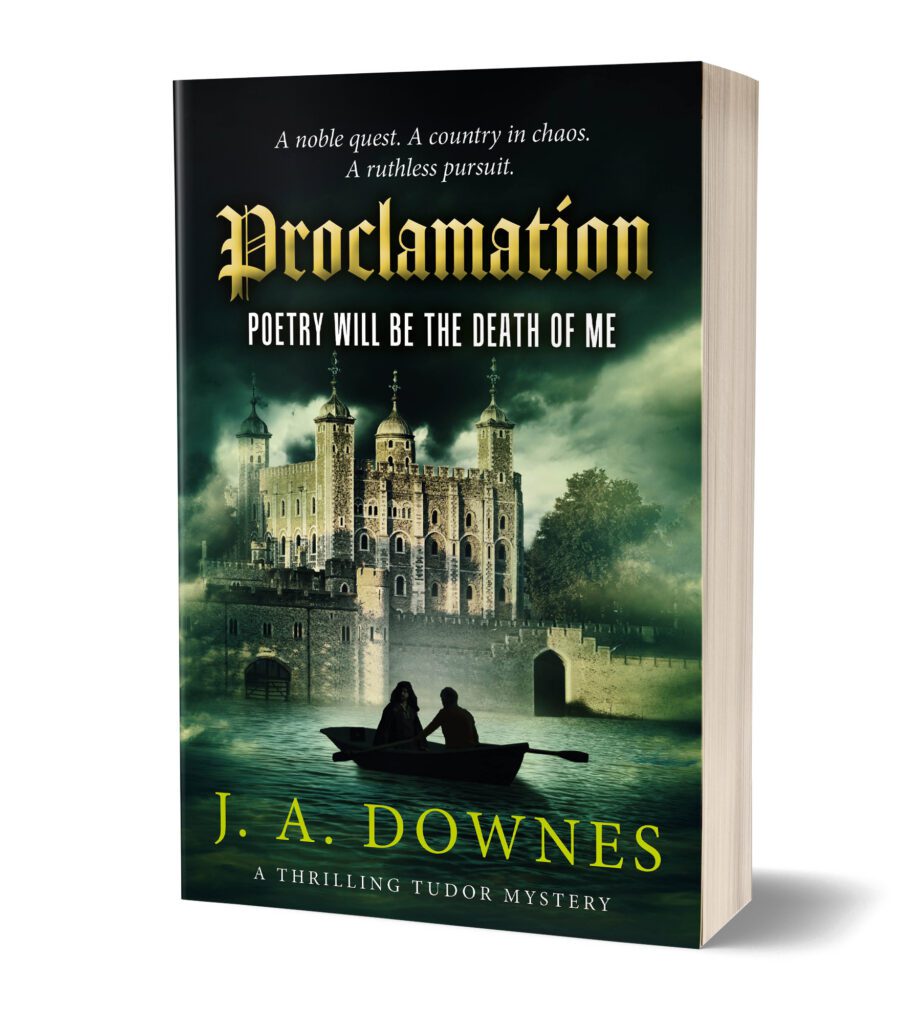
Proclamation follows on just days after Predestination ends, spanning July-August 1553.
Queen Jane is proclaimed as the Queen, even though most of the population has never heard of her and was instead expecting Mary to be queen.
Against this backdrop, John Dee and his colleague Jack are embroiled in an adventure to assist Princess Elizabeth, who is in deadly danger from her own half-sister Mary and her councillors.
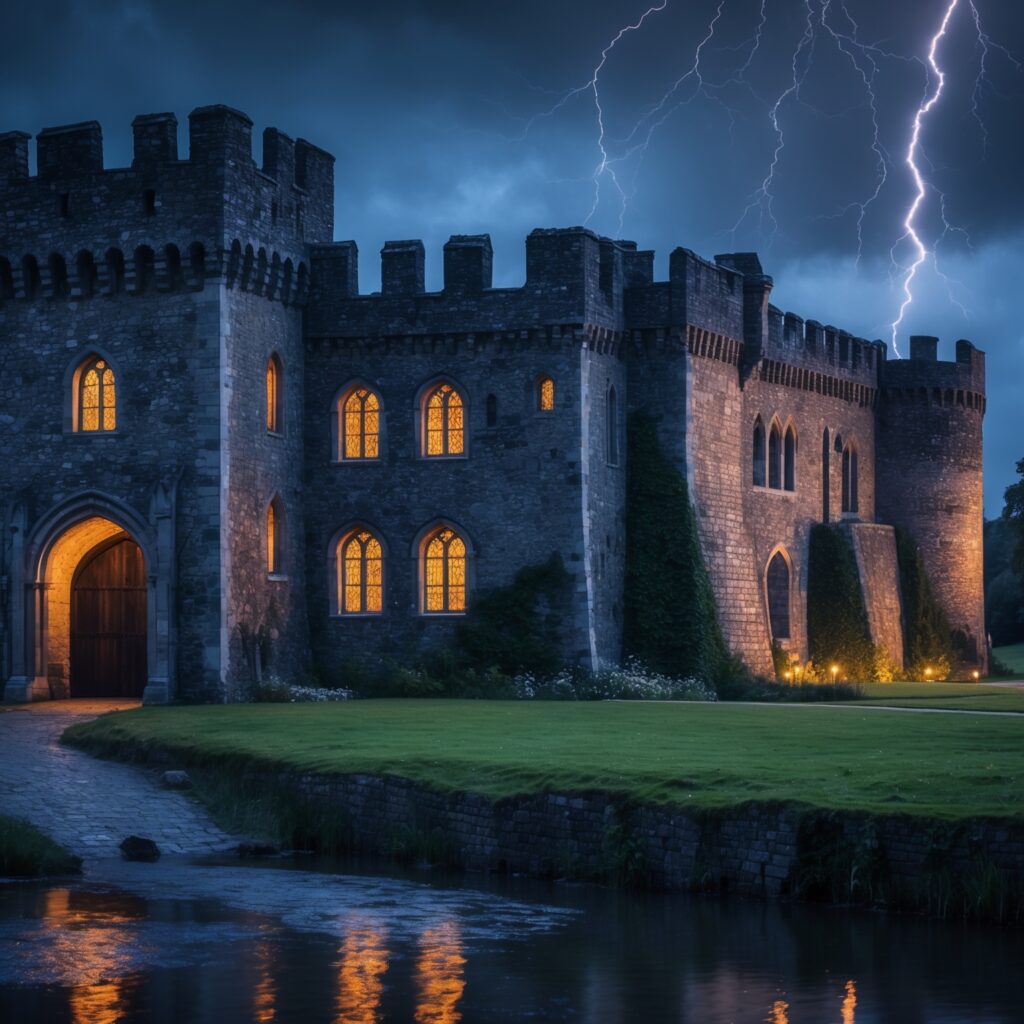
Wyatt’s Rebellion – 1554
Although most of the population supported Mary’s right to be their Queen, not everyone welcomed her rapid re-imposition of Catholicism. And they certainly didn’t think she should marry a Spanish prince.
A rebellion against this foreign marriage was launched, and was thwarted by a mixture of loyalist cunning, rebel incompetence, and perhaps most crucially, by unexplained tardiness in taking the rebel militia into London.
Insurrection
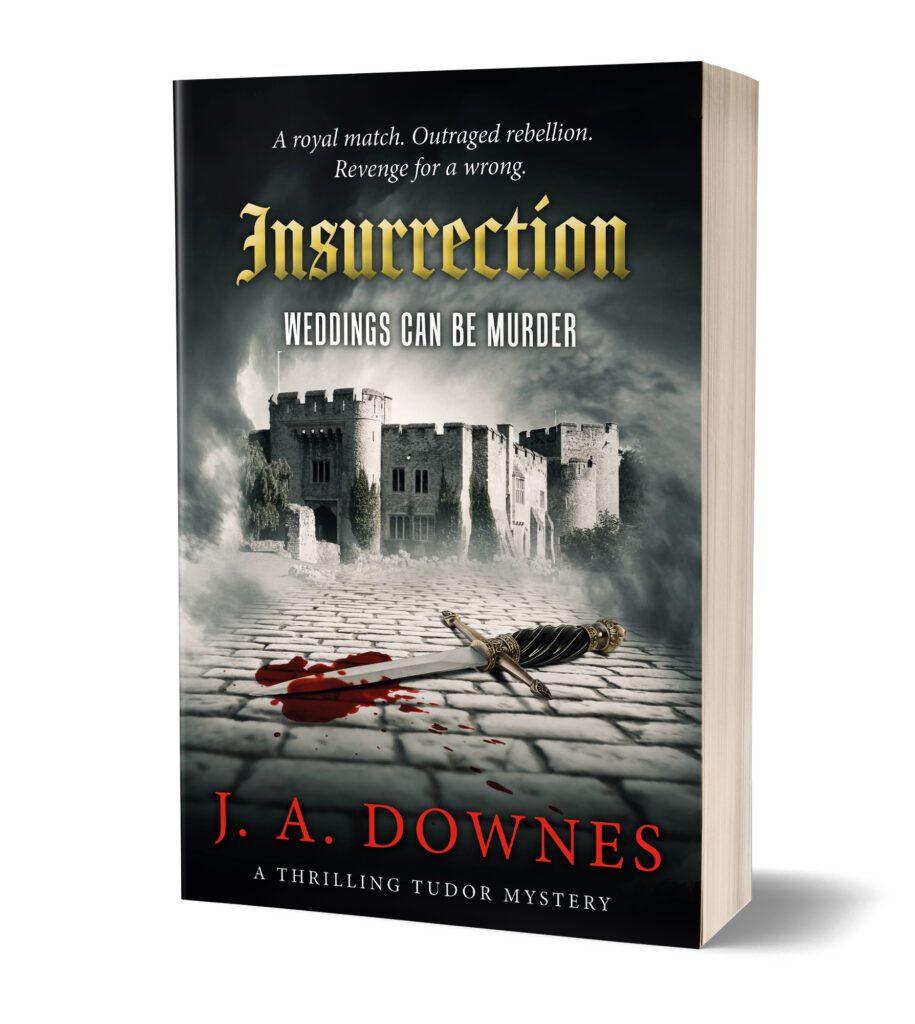
Insurrection starts in November 1553 and culminates in February 1554 (although for some the impact echoed on into 1555).
John Dee travels to Allington castle, the home of Thomas Wyatt.
He is plunged into a race against time; can he identify a murderer before the castle’s inhabitants march against the Queen’s evil councillors in London?