
The King Who Made His Daughters Illegitimate: Henry VIII and the Politics of Succession
Imagine waking up one morning to discover that, by royal decree, you are no longer considered legitimate. That your very existence has been legally erased from the line of succession, and that the father who once called you his beloved daughter now treats your birth as an inconvenient embarrassment. This was the reality for both Mary and Elizabeth Tudor, daughters of Henry VIII, who found themselves declared illegitimate not once, but at different points in time, as their father repeatedly rewrote the rules of succession to suit his own political and personal needs. It is one of the most remarkable and troubling episodes in Tudor history, and it tells us something profound about the nature of royal power in sixteenth-century England.
Henry VIII is remembered for many things: his six marriages, his break with Rome, his vast physical presence, and his terrifying willingness to execute those who displeased him. Yet perhaps one of his most extraordinary acts was his repeated manipulation of the laws of legitimacy, using Parliament and royal proclamation to declare his own children legally base-born when it suited him, only to reverse or modify those declarations when circumstances changed. As both a historian and a historical fiction author, I find this episode endlessly fascinating, not merely as a legal curiosity, but as a window into the psychological and political world of a man who believed himself answerable to no authority but God.
In this post, we will explore exactly how and why Henry declared both Mary and Elizabeth illegitimate, what the consequences were for each princess, and why this episode continues to matter for our understanding of Tudor politics, royal authority, and the extraordinary survival of two women who would both eventually wear the crown of England.
Historical Background: The Succession Crisis and the Mechanics of Illegitimacy
To understand why Henry VIII declared his daughters illegitimate, we must first understand the succession crisis that dominated the early decades of his reign. Henry had married his first wife, Catherine of Aragon, in 1509, and she had borne him one surviving child: the Princess Mary, born in 1516. For Henry, who was consumed by the need for a male heir to secure the Tudor dynasty, a daughter was not enough. By the late 1520s, he had become convinced that his marriage to Catherine was invalid in the eyes of God, since Catherine had previously been married to his elder brother, Arthur. When Pope Clement VII refused to grant an annulment, Henry embarked on the seismic break with Rome that would reshape English religion and politics forever.
The consequences for Mary were immediate and devastating. In 1533, Henry married Anne Boleyn in secret, and Parliament passed the First Succession Act of 1534, which declared Catherine’s marriage void and Mary illegitimate. Mary was stripped of her title of Princess and forced to serve in the household of her newborn half-sister, Elizabeth, who was now recognised as the legitimate heir. According to David Starkey’s authoritative biography Elizabeth: Apprenticeship, this period was one of extraordinary psychological cruelty, as Mary was denied access to her mother and forced to acknowledge her own illegitimacy or face accusations of treason. The State Papers Online for the Tudor period are filled with correspondence documenting the pressure placed upon Mary to submit to her new status.
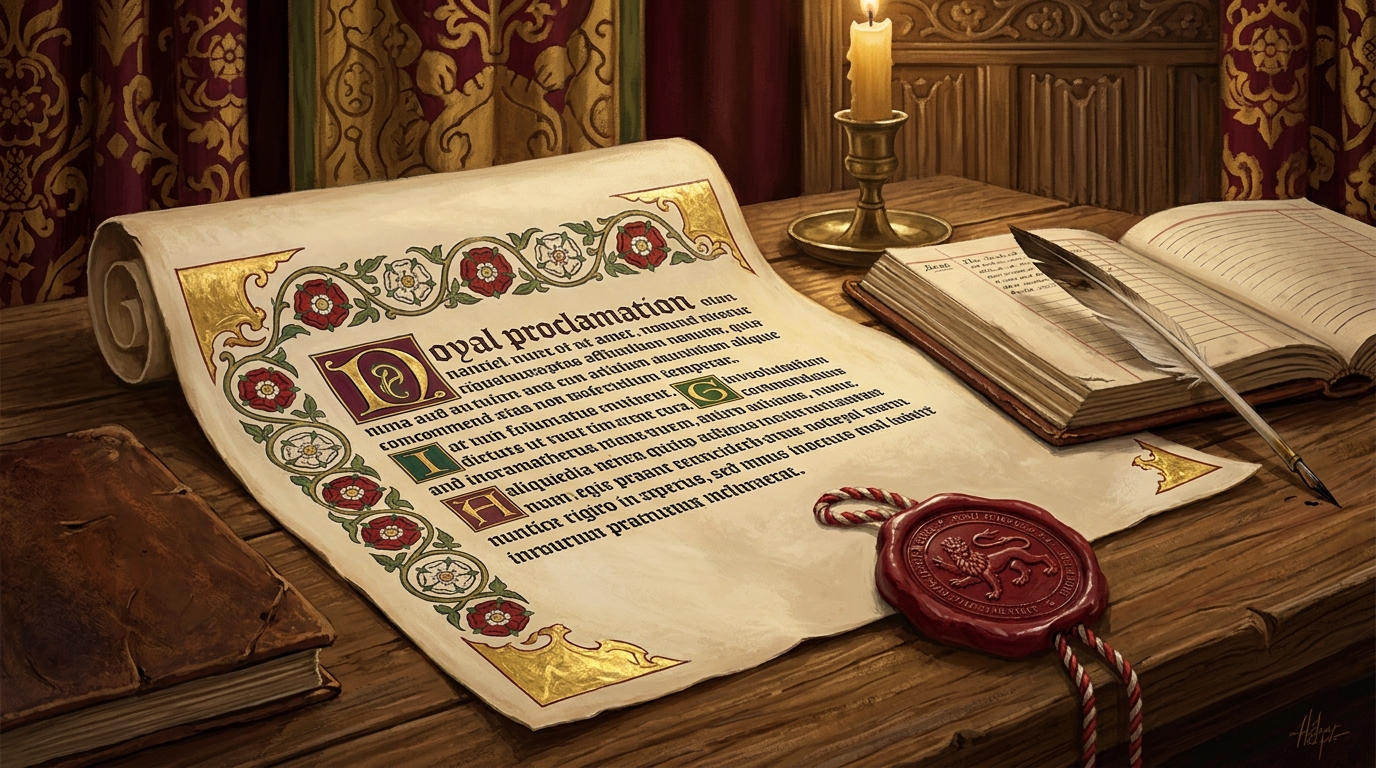
Then, with breathtaking swiftness, the situation reversed. In 1536, Anne Boleyn was arrested on charges of adultery and treason, charges which most modern historians regard as fabricated or wildly exaggerated. She was executed in May 1536, and within days Henry had married Jane Seymour. Parliament passed the Second Succession Act later that year, which now declared both Mary and Elizabeth illegitimate, removing them both from the succession and vesting the crown in any children Henry might have with Jane Seymour. Elizabeth, barely three years old, had been demoted just as swiftly as her mother had fallen. As Starkey notes, the young Elizabeth’s earliest experiences were shaped by this atmosphere of radical instability, in which royal favour could evaporate overnight.
The situation was partially resolved by the Third Succession Act of 1544, which restored both Mary and Elizabeth to the succession, though crucially without restoring their legitimacy. They remained, in strict legal terms, base-born, yet were placed in the line of succession by parliamentary authority. This was an extraordinary constitutional innovation, reflecting Henry’s willingness to use Parliament as an instrument of his personal will whilst simultaneously demonstrating the limits of even royal power in resolving the contradictions he had created.
Significance and Impact: Power, Law, and the Daughters Who Survived
The significance of Henry’s repeated changes to the succession cannot be overstated. In one sense, these proclamations reveal the extraordinary degree to which Henry VIII believed that law was a tool to be wielded rather than a constraint to be respected. He did not merely seek legal cover for his actions; he actively reshaped English law, through Parliament and through royal prerogative, to reflect his momentary desires. This manipulation of legitimacy had profound consequences for English constitutional development, demonstrating that parliamentary statute could override both canon law and common law traditions regarding inheritance.
For Mary and Elizabeth personally, the experience of illegitimacy was formative in ways that shaped their later reigns. Mary’s humiliation and suffering during the 1530s deepened her attachment to Catholicism and her fierce loyalty to her mother’s memory. When she eventually became queen in 1553, her determination to restore papal authority in England was inseparable from her personal history of degradation at Protestant hands. Elizabeth’s experience was different but no less significant. Growing up in an atmosphere of uncertainty, knowing that her status could change with a royal whim or a parliamentary act, she developed the famous caution and ambiguity that would characterise her reign. She had learnt, at the earliest possible age, that nothing was permanent and that survival required flexibility.
The broader impact on Tudor society was also considerable. The repeated changes to the succession created genuine uncertainty and anxiety among the nobility and gentry, who needed to know whom to support and how to position themselves. Backing the wrong claimant could mean attainder and death, and when the legal status of potential heirs kept shifting, the risks multiplied. State Papers from the period reveal a court in constant tension, where allegiances had to be carefully managed and where the definition of legitimate royal authority was perpetually contested.
Connections and Context: The Wider Tudor World
Henry’s manipulation of legitimacy did not occur in isolation. It was part of a broader transformation of English political and religious culture that included the dissolution of the monasteries, the execution of Thomas More and Bishop John Fisher, and the establishment of royal supremacy over the Church. All of these events shared a common thread: the assertion that royal will, expressed through Parliament, could override any previously existing authority, whether ecclesiastical, legal, or dynastic.
Did you know? The 1544 Third Succession Act was the first time in English history that Parliament explicitly placed individuals in the line of succession despite their acknowledged illegitimacy. This set a remarkable precedent, suggesting that parliamentary authority could effectively compensate for the lack of legitimate birth, a principle that would have significant implications for future constitutional debates.
It is also worth noting that Henry’s succession anxieties were shared across European royal courts. The question of legitimate heirs was existential for dynasties in an age of high infant mortality and political fragility. What made Henry’s situation distinctive was the sheer number of times the succession was formally altered, and the degree to which personal motivation, specifically his desire for a male heir and his serial pursuit of new wives, drove what were presented as legal and religious necessities.
Modern Relevance and Fascinating Details
For modern readers, the story of Henry’s illegitimacy proclamations resonates because it speaks to enduring questions about the relationship between power and law. Can those in authority simply rewrite the rules when those rules become inconvenient? Henry’s answer, essentially, was yes, provided you controlled Parliament and had sufficient force of personality to compel compliance. The echoes of this in contemporary political discourse are not difficult to find, and it is perhaps one reason why Tudor history retains such a grip on the popular imagination.
From my perspective as a historical fiction author, this episode is irresistible precisely because of its human dimensions. Behind the dry language of parliamentary acts and royal proclamations were real women, real children, experiencing genuine fear and humiliation. Elizabeth, declared illegitimate as an infant, would grow up to become one of England’s greatest monarchs, her famous self-possession forged in the crucible of her father’s inconstancy. There is something almost novelistic about the arc of her story, which is perhaps why she has inspired so much historical fiction.
Did you know? Even after the Third Succession Act restored Elizabeth to the line of succession, her illegitimacy was never formally repealed. When she became Queen in 1558, she was, technically speaking, still a bastard in the eyes of strict law. She chose never to address this directly, preferring simply to govern as queen and let the practical reality speak for itself.
Conclusion: The Legacy of a King Who Rewrote the Rules
Henry VIII’s repeated declarations of illegitimacy against his daughters stand as one of the most striking examples of the intersection of personal desire and political power in English history. By treating the law of succession as a flexible instrument rather than a fixed framework, he created confusion, suffering, and constitutional innovations that would echo through English history for generations. Yet in a profound irony, the two daughters he so casually discarded would both outlast his male line and reign as queens in their own right, their characters shaped in no small part by the instability their father had imposed upon them.
If you are interested in exploring Tudor history further, the State Papers Online for the Tudor period offer an extraordinary window into the documentary record of this turbulent age, whilst David Starkey’s Elizabeth: Apprenticeship remains an essential guide to understanding how the future queen navigated the dangers of her early life. The story of Henry VIII and his daughters is one of the great human dramas of the sixteenth century, and it deserves to be understood in all its complexity, cruelty, and remarkable consequence.