
The Day Elizabeth I Became Supreme Governor: How the 1559 Act of Supremacy Reshaped England Forever
Imagine inheriting a kingdom torn apart by decades of religious upheaval, where your father had broken from Rome, your brother had pushed Protestantism to radical extremes, and your half-sister had burned nearly three hundred people at the stake in a desperate attempt to drag the country back to Catholicism. This was the England that Queen Elizabeth I stepped into when she ascended the throne in November 1558. Less than six months later, on 8 May 1559, she signed one of the most consequential pieces of legislation in English history: the Act of Supremacy. In doing so, she did not merely change a law. She changed the soul of a nation.
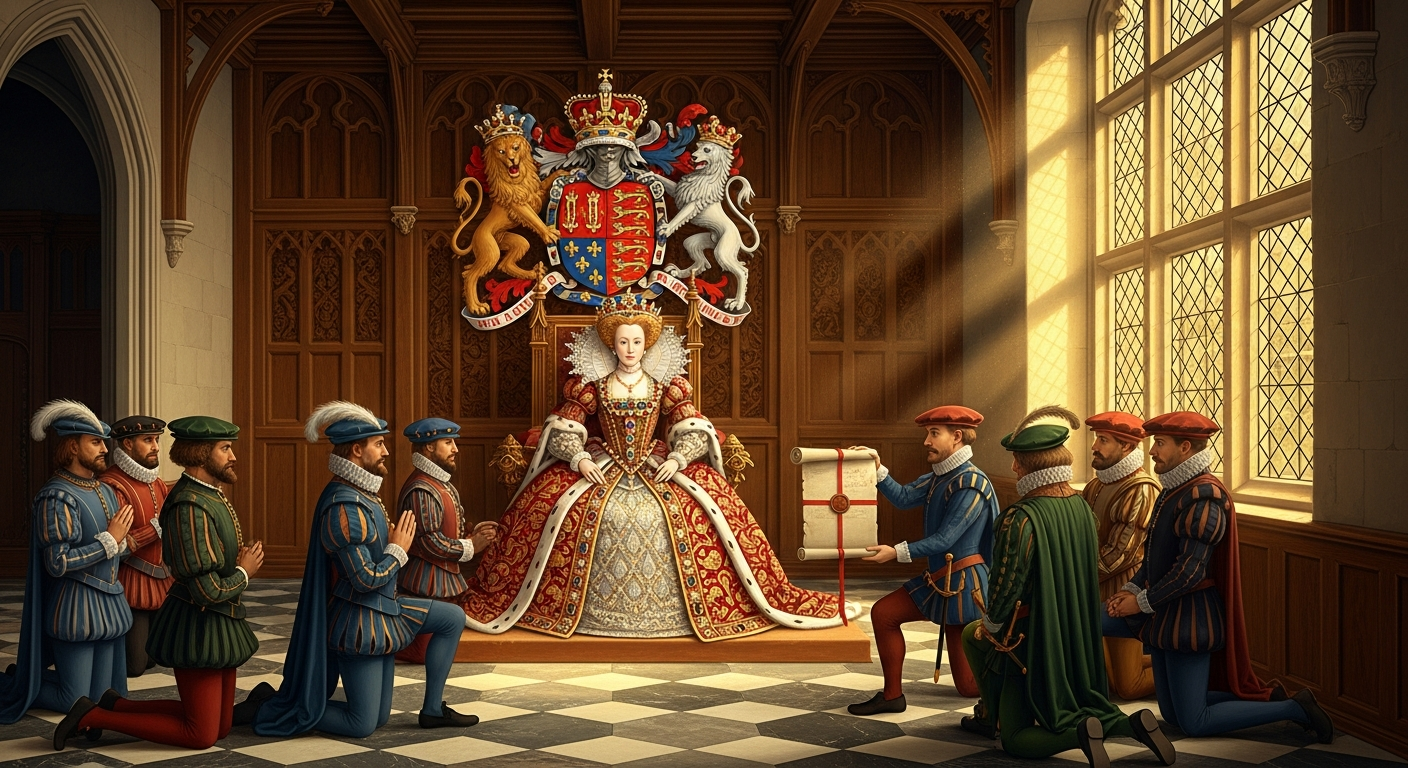
The Act of Supremacy, granted Royal Assent on that spring day in 1559, officially established the English monarch as Supreme Governor of the Church of England, reversing the Catholic restoration policies of her half-sister, Mary I, and setting England on a firmly Protestant course. Yet the story behind this document is far richer and more complicated than a simple reversal of policy. It is a tale of political genius, theological compromise, and the extraordinary personal courage of a young queen navigating one of the most dangerous religious landscapes in European history.
In this post, we will explore the historical background to the Act, examine why it mattered so profoundly for Tudor society and politics, and consider why, more than four and a half centuries later, its legacy continues to shape British life in ways most people never stop to consider.
Historical Background: The Long Road to 8 May 1559
To understand the significance of what happened on 8 May 1559, we must first understand the extraordinary religious chaos that preceded it. Henry VIII had broken with Rome in the 1530s, primarily to secure his divorce from Catherine of Aragon, establishing himself as Supreme Head of the Church of England through the original Act of Supremacy of 1534. His son, Edward VI, had pushed the English church in a far more radically Protestant direction during his brief reign from 1547 to 1553. Then came Mary I, Edward’s half-sister and a devout Catholic, who repealed her father’s Supremacy legislation, reconciled England with Rome, and oversaw a brutal persecution of Protestants that earned her the enduring epithet Bloody Mary. As the historian William Camden noted in his Annales, the True and Royall History of the Famous Empresse Elizabeth (1625), Elizabeth inherited a kingdom deeply fractured along religious lines, one that required careful and decisive leadership to stabilise.
Elizabeth herself had survived this turbulent era through a combination of intelligence, caution, and ambiguity. During Mary’s reign, she had attended Catholic Mass whilst privately maintaining Protestant sympathies, a strategy of studied neutrality that had kept her alive when many others perished. When she became queen in November 1558, it was clear that religious settlement could not wait. England needed to know what it was.
The Parliament that convened in January 1559 debated the question fiercely. Elizabeth and her principal adviser, Sir William Cecil, were determined to restore Royal Supremacy over the church, but they faced significant opposition, particularly from the Catholic bishops in the House of Lords. The compromise that emerged was subtle and significant: where Henry VIII had styled himself Supreme Head of the Church, Elizabeth would be styled Supreme Governor. This was not merely a semantic difference. It acknowledged, at least in part, the concerns of those who felt a woman could not be the spiritual head of a church, whilst still firmly placing ecclesiastical authority under the Crown rather than the Pope.
The Act, as recorded in The Statutes of the Realm, Volume 4, Part 1 (1819), formally required all clergy and public officials to swear an oath acknowledging the royal supremacy. Those who refused faced severe penalties, including loss of office and, for repeat offenders, charges of treason. It was a document with real teeth, and Elizabeth’s government intended it to be enforced.
Significance and Impact: Why the Act of Supremacy Changed Everything
The immediate significance of the Act of Supremacy was that it drew a clear line in the sand. England was Protestant, and its monarch, not the Pope in Rome, held authority over its church. This had enormous consequences for foreign policy, domestic politics, and the daily lives of ordinary English men and women. Catholic powers such as Spain and France now had a formal grievance against the English Crown, one that would fuel decades of tension and, eventually, outright conflict.
Within England, the Act set in motion the machinery of what historians now call the Elizabethan Religious Settlement. Alongside the Act of Uniformity, passed on the same day, it created the legal framework for a distinctly English form of Protestantism: not the radical Calvinism favoured by some reformers, nor the near-Catholicism of the Henrician church, but something deliberately middle-ground. Elizabeth’s settlement was designed to be as inclusive as possible, accommodating a broad range of Protestant opinion whilst excluding Rome. As Camden observed, Elizabeth moved with characteristic shrewdness, understanding that religious uniformity imposed too harshly would breed resentment and resistance.
For ordinary Tudor people, the consequences were felt in churches across the country. The Latin Mass was abolished, replaced once again with the English-language services of the Book of Common Prayer. Clergy who had conformed to Catholicism under Mary were now required to conform again to Protestantism, or face removal. Some did so willingly; others with reluctance; a small but determined minority refused and paid the price. The Act did not end religious conflict in England. Far from it. But it established the terms on which that conflict would be fought for the next century and beyond.
Did you know? All eight of the Catholic bishops in the House of Lords voted against the Act of Supremacy in 1559. Their opposition was ultimately overcome by the Crown’s majority among temporal peers, but it illustrated just how contested the settlement truly was.
Connections and Context: A Europe in Religious Turmoil
It is impossible to understand the Act of Supremacy in isolation from the broader European context. The year 1559 was one of extraordinary significance across the continent. The Peace of Cateau-Cambrésis, signed in April of that year, ended the long Italian Wars between France and Spain, fundamentally reshaping the European balance of power. With France and Spain no longer at war with each other, the prospect of a Catholic alliance against Protestant England became suddenly more plausible, and this undoubtedly influenced the urgency with which Elizabeth and Cecil pressed forward with the religious settlement.
Meanwhile, in Scotland, the Protestant Reformation was gathering pace under the fiery preaching of John Knox, and the question of Mary, Queen of Scots, a Catholic claimant with a strong hereditary claim to the English throne, was already beginning to cast its long shadow over Elizabethan politics. The Act of Supremacy was not simply a domestic religious measure. It was a geopolitical statement, signalling to the courts of Europe that England under Elizabeth would not be returning to the Roman fold.
For readers fascinated by this period, the connections between the 1559 settlement and later events are endlessly rich. The persecution of Catholics that followed, the plots to place Mary Queen of Scots on the English throne, the Spanish Armada of 1588, and the eventual execution of Mary herself in 1587 all flow, in one way or another, from the decisions made in Parliament during those spring weeks of 1559.
Fascinating Details and Modern Relevance: The Legacy That Never Left
One of the most striking things about the Act of Supremacy, for readers encountering it for the first time, is how much of its legacy remains alive today. The Church of England still exists as a state church, and the British monarch remains its Supreme Governor. At her coronation in 1953, Queen Elizabeth II swore an oath to maintain the Protestant reformed religion established by law, a direct descendant of the settlement Elizabeth I put in place in 1559. When King Charles III was crowned in 2023, he made similar commitments. The constitutional architecture of the English Reformation, built in part on that May morning in 1559, is still standing.
As a historical fiction author, I find the personal dimensions of this story irresistible. Elizabeth was twenty-five years old when she signed the Act of Supremacy. She had grown up watching the English church change shape repeatedly, had seen what religious conviction could drive people to do, and had herself come perilously close to the Tower and the scaffold. The young woman who put her name to that document understood, in a way few monarchs ever have, exactly what was at stake. Camden captures something of this in his Annales, portraying Elizabeth as a ruler acutely conscious of the dangers on every side, proceeding with deliberation rather than passion. That careful, calculating intelligence is precisely what makes her such a compelling figure for novelists and historians alike.
Did you know? The title Supreme Governor rather than Supreme Head, which Elizabeth adopted in the 1559 Act, is still the official title used today. It was a sixteenth-century diplomatic compromise that has outlasted empires.
Conclusion: A Moment That Made Modern Britain
The granting of Royal Assent to the Act of Supremacy on 8 May 1559 was one of those hinge moments in history where the decisions of a single day ripple outward across centuries. It settled, at least in legal terms, the question of who held authority over the English church. It defined England as a Protestant nation in a Catholic Europe. It set the stage for decades of religious tension, political intrigue, and eventually open conflict. And it established a constitutional principle, the supremacy of the Crown over the church, that persists to this day.
Whether you are a student of Tudor history, a lover of historical fiction, or simply someone curious about how the modern world came to be shaped the way it is, the story of Elizabeth I and the 1559 Act of Supremacy repays close attention. If you would like to explore further, the primary sources are illuminating: The Statutes of the Realm, Volume 4, Part 1 offers the legal text itself, whilst William Camden’s Annales provides a near-contemporary narrative of Elizabeth’s reign that remains compulsive reading. The past, as always, is far stranger and more fascinating than we imagine.